
Why Team Scheduling Often Becomes a Productivity Problem
Modern teams spend a surprising amount of time coordinating schedules. Finding available meeting times, managing project deadlines, organizing events, and avoiding scheduling conflicts can quickly become a daily challenge.
Many organizations already use Google Calendar, but most teams only use a fraction of its capabilities. Beyond simply creating meetings, Google Calendar can become a powerful productivity hub that improves collaboration, reduces interruptions, and helps teams work more efficiently.
Whether you’re managing a small startup, a remote workforce, or a growing company, these scheduling and productivity hacks can help your team save time and stay organized.
Why Team Scheduling Often Becomes a Productivity Problem
As businesses grow, schedules become increasingly complex. Team members work across departments, projects have overlapping deadlines, and meetings compete for everyone’s attention.
Common scheduling challenges include:
- Double-booked meetings
- Lack of visibility into team availability
- Missed deadlines
- Too many unnecessary meetings
- Difficulty coordinating remote employees
- Last-minute schedule changes
Without a structured calendar system, employees spend valuable time managing schedules instead of focusing on meaningful work.
Google Calendar helps solve many of these challenges when used strategically.
Create Shared Calendars for Departments and Projects
One of the most effective features for team calendar management is shared calendars.
Instead of relying solely on individual calendars, teams can create dedicated calendars for specific purposes.
Examples include:
- Marketing team calendar
- Sales calendar
- HR calendar
- Project launch calendar
- Company events calendar
- Training calendar
Shared calendars provide visibility across teams and ensure important events are accessible to everyone who needs them.
Benefits include:
- Improved coordination
- Reduced communication delays
- Better deadline awareness
- Greater project transparency
When everyone works from the same schedule, collaboration becomes significantly easier.
How Real Teams Use Google Calendar Every Day
Many organizations start using Google Calendar simply for meeting invitations. However, the most productive teams use it as a central scheduling system that helps coordinate projects, deadlines, resources, and employee availability.
The way a team uses Google Calendar often depends on its role within the business.
How Marketing Teams Use Google Calendar
Marketing departments often manage multiple campaigns simultaneously. A shared team calendar helps everyone stay aligned on upcoming activities.
Typical marketing calendar events include:
- Content publishing schedules
- Campaign launch dates
- Social media planning sessions
- Design review meetings
- Product announcement deadlines
By viewing campaign activities in one place, marketing teams can reduce missed deadlines and improve coordination.
How Sales Teams Use Google Calendar
Sales professionals rely heavily on scheduling. Shared calendars help managers understand team availability and plan activities more efficiently.
Common sales calendar events include:
- Client demonstrations
- Follow-up reminders
- Weekly pipeline reviews
- Prospect meetings
- Quarterly sales planning sessions
A structured scheduling process helps sales teams spend less time coordinating and more time selling.
How HR Teams Use Google Calendar
Human resource departments often manage multiple employee-related activities.
Examples include:
- Candidate interviews
- Employee onboarding sessions
- Training programs
- Performance reviews
- Company events
Shared calendars help HR teams keep everyone informed while maintaining a consistent schedule across departments.
Use Color Coding to Organize Team Activities
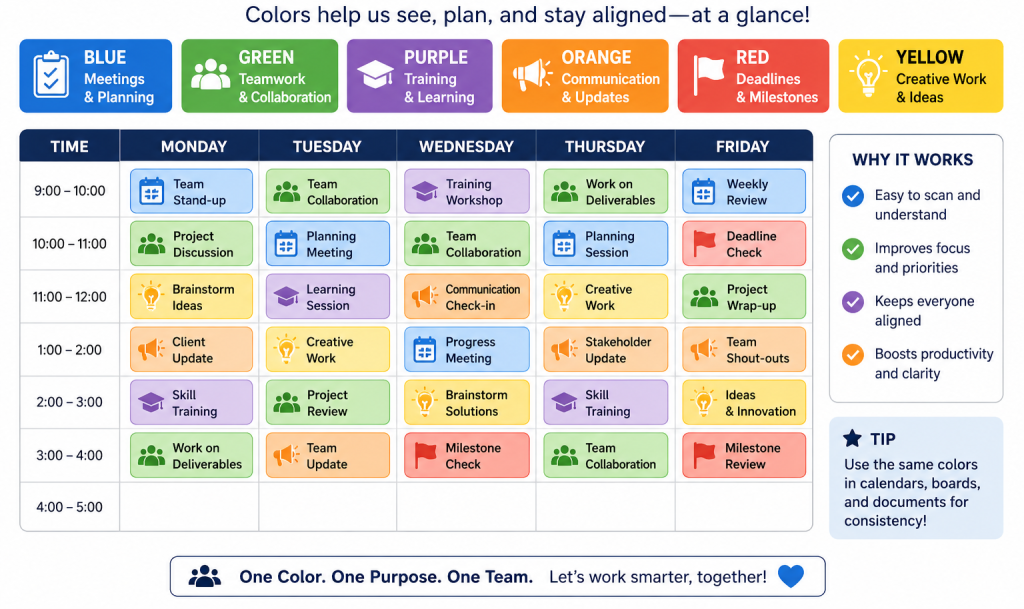
A simple productivity hack that many teams overlook is calendar color coding.
Assigning specific colors to different types of events helps employees understand their schedules at a glance.
Examples include:
- Client Meetings
- Internal Meetings
- Deadlines
- Training Sessions
- Personal Tasks
- Team Events
This visual organization makes calendars easier to interpret and helps team members prioritize their time more effectively.
Publish Team Availability Instead of Endless Messaging
Many organizations waste time asking coworkers about availability.
Google Calendar allows employees to share availability so colleagues can quickly identify open time slots.
This reduces:
- Back-and-forth emails
- Internal chat interruptions
- Scheduling delays
For growing companies, this simple adjustment can save hours every week.
Block Focus Time to Reduce Meeting Overload
One of the biggest productivity killers in modern workplaces is constant meetings.
Employees often struggle to complete meaningful work because their calendars are fragmented throughout the day.
A useful strategy is scheduling dedicated focus blocks.
Examples include:
- Deep work sessions
- Project execution periods
- Strategic planning time
When focus time is visible on calendars, colleagues are less likely to schedule interruptions.
Advanced Google Calendar Features Teams Should Use
Many businesses only use basic scheduling functions and overlook several productivity-enhancing features.
Using Multiple Calendar Overlays
Managers often need visibility into several schedules at once.
Google Calendar allows users to display multiple calendars simultaneously, making it easier to coordinate projects across departments and identify scheduling conflicts.
Managing Multiple Time Zones
For remote and hybrid teams, scheduling across different locations can become challenging.
Google Calendar can display multiple time zones, helping teams coordinate meetings without confusion.
Using Out of Office Events
Out-of-office events automatically notify colleagues when someone is unavailable.
This helps prevent unnecessary meeting invitations and improves schedule transparency.
Keyboard Shortcuts for Faster Calendar Management
Power users can enable keyboard shortcuts to perform common actions quickly.
Benefits include:
- Creating events faster
- Navigating dates efficiently
- Searching schedules instantly
Using Google Tasks Alongside Google Calendar
Teams can combine Google Tasks with calendar scheduling to improve personal productivity.
This allows employees to:
- Track assignments
- Set deadlines
- Organize priorities
- View tasks alongside meetings
Use Working Hours Settings
Teams operating across multiple locations often face scheduling confusion.
Google Calendar allows users to define working hours so colleagues know when meetings are appropriate.
Benefits include:
- Respecting work-life balance
- Preventing after-hours meetings
- Supporting remote teams
- Reducing scheduling conflicts
Create Appointment Schedules for Internal Consultations
Managers, HR professionals, technical specialists, and department heads often receive frequent meeting requests.
Instead of manually coordinating appointments, they can publish appointment schedules.
Team members simply select an available time slot.
Advantages include:
- Faster scheduling
- Reduced administrative work
- Improved availability management
- Better employee experience
How to Create a Shared Team Calendar
Creating a shared calendar is straightforward and can significantly improve team coordination.
Step 1: Open Google Calendar
Launch Google Calendar using your browser.
Step 2: Create a New Calendar
Click the plus icon beside “Other Calendars” and select “Create New Calendar.”
Step 3: Name the Calendar
Give the calendar a meaningful name that reflects its purpose.
Step 4: Configure Permissions
Assign access levels to team members and managers.
Step 5: Share With Your Team
Add employees who need access and define viewing or editing rights.
How to Schedule Meetings More Efficiently
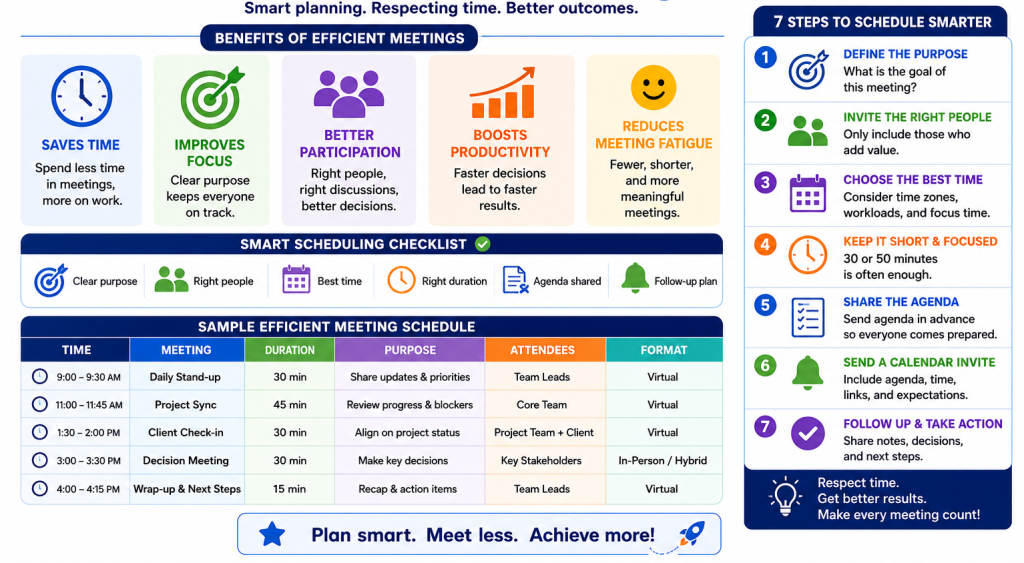
Effective scheduling is not just about finding free time. It is about protecting productivity while keeping communication flowing.
Best practices include:
- Schedule meetings only when necessary
- Share agendas in advance
- Use shorter meeting durations
- Respect employee focus time
- Avoid scheduling outside working hours
- Review recurring meetings regularly
Automate Recurring Meetings Properly
Recurring meetings save time, but poorly managed recurring events often become calendar clutter.
Set Clear Objectives
Every recurring meeting should have a defined purpose.
Review Quarterly
Remove meetings that no longer provide value.
Shorten Meeting Lengths
Many 60-minute meetings can become 30-minute sessions.
Include Agendas
Attendees should know why they are attending before accepting.
Use Calendar Notifications Strategically
Notifications can help productivity—or create distraction.
A balanced approach includes:
- 24-hour reminders for important meetings
- 10-minute reminders before meetings
- Email notifications for major events only
- Fewer unnecessary alerts
Manage Company Resources Through Calendars
Google Calendar can also track shared resources.
Examples include:
- Conference rooms
- Company vehicles
- Training facilities
- Presentation equipment
- Studio spaces
Resource scheduling prevents double bookings and improves operational efficiency.
Improve Remote Team Coordination
Remote and hybrid work environments require greater scheduling discipline.
Google Calendar helps distributed teams by:
- Displaying time zones automatically
- Sharing project schedules
- Coordinating team events
- Tracking deadlines
- Maintaining visibility across locations
Create Deadline Calendars for Better Project Management
Many teams track tasks in project management software but forget to create visibility around important deadlines.
A dedicated project deadline calendar can include:
- Product launches
- Marketing campaigns
- Client deliverables
- Compliance deadlines
- Internal milestones
Reduce Meeting Length with Default Duration Settings
One powerful productivity hack is adjusting default meeting durations.
Instead of scheduling:
- 30-minute meetings
- 60-minute meetings
Consider:
- 25-minute meetings
- 50-minute meetings
These small gaps create breathing room between appointments and reduce schedule fatigue.
Establish Team Calendar Guidelines
Technology alone cannot solve scheduling problems.
Successful organizations establish clear calendar rules.
Meeting-Free Time Blocks
Reserve certain periods for focused work.
Response Expectations
Define how quickly invitations should be accepted or declined.
Calendar Transparency
Encourage employees to keep availability updated.
Event Naming Standards
Use consistent naming conventions for easier organization.
Our Experience Helping Teams Improve Scheduling
At CreativeON, we’ve worked with organizations of different sizes implementing Google Workspace solutions. One pattern appears consistently: teams that establish clear calendar practices early tend to experience fewer scheduling conflicts and better communication.
Many businesses initially use Google Calendar only for sending meeting invitations. Once they begin using shared calendars, focus-time blocks, department calendars, and resource scheduling, productivity often improves without introducing additional software.
The biggest gains usually come from process improvements rather than technology changes. A well-organized calendar system helps teams work more effectively using tools they already have.
Common Google Calendar Mistakes That Hurt Productivity
Scheduling Every Meeting for One Hour
Many discussions can be completed in 25 or 50 minutes.
Ignoring Focus Time
When calendars contain only meetings, employees struggle to complete meaningful work.
Not Updating Availability
Outdated calendars create confusion and increase scheduling conflicts.
Keeping Unnecessary Recurring Meetings
Some recurring meetings continue long after they provide value.
Using Too Many Separate Calendars
Excessive calendar creation can make information harder to find.
Frequently Asked Questions
Yes. Shared calendars allow multiple team members to view and manage schedules depending on assigned permissions.
Yes. Many businesses use Google Calendar to coordinate meetings, project deadlines, team events, and employee availability.
Absolutely. Shared calendars, time zone support, and availability settings make it easier for distributed teams to collaborate.
Shared calendars reduce scheduling conflicts, improve visibility, and eliminate much of the back-and-forth communication involved in arranging meetings.
Yes. Permission settings allow managers and team leaders to view availability and coordinate schedules more effectively.
Final Thoughts
Google Calendar for Teams is much more than a scheduling tool. When implemented strategically, it becomes a central coordination platform that improves visibility, reduces scheduling conflicts, and helps employees manage their time more effectively.
By using shared calendars, availability sharing, focus blocks, appointment schedules, resource management, and smarter meeting practices, organizations can create a more productive work environment with fewer interruptions and better collaboration.
Small improvements in calendar management often produce significant gains in team efficiency. The most productive teams are not necessarily those that work longer hours—they are the ones that schedule their time intelligently.
About the Author
This guide is brought to you by Asher Feroze. I’ve worked in various roles at CreativeON, including Manager Operations, Manager Marketing, and Level 2 Client Support. These days, I focus on helping people like you understand our products — whether it’s Domains, Dedicated Servers, VPS, Cloud Hosting, or Google Workspace — in simple, practical language. My goal is to make technology work for your business, not against it.