What Are Subdomains? Uses, Examples & Benefits
If you’ve ever seen URLs like blog.example.com or shop.example.com and wondered what they are, you’re looking at subdomains. As your website grows, managing everything under one single structure can become confusing. You may want a separate space for your blog, store, customer portal, or even different regions like the UAE. Instead of buying multiple domains, […]
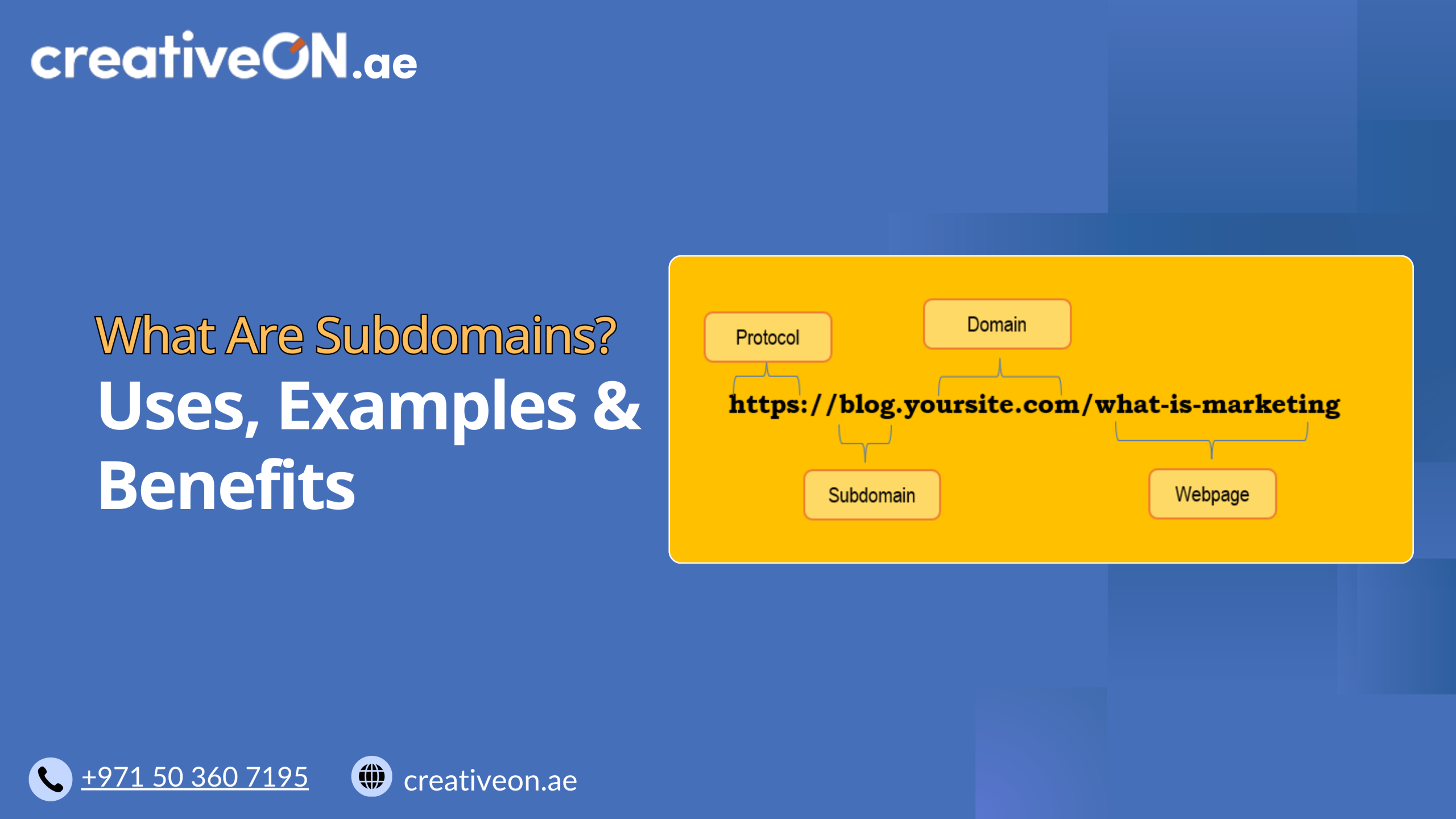
If you’ve ever seen URLs like blog.example.com or shop.example.com and wondered what they are, you’re looking at subdomains.
As your website grows, managing everything under one single structure can become confusing. You may want a separate space for your blog, store, customer portal, or even different regions like the UAE. Instead of buying multiple domains, subdomains give you a smarter way to organize everything.
For startups, SMEs, and growing businesses in the UAE, subdomains are an important part of building a scalable and professional online presence. They help you expand without losing structure—and that’s why understanding them matters.
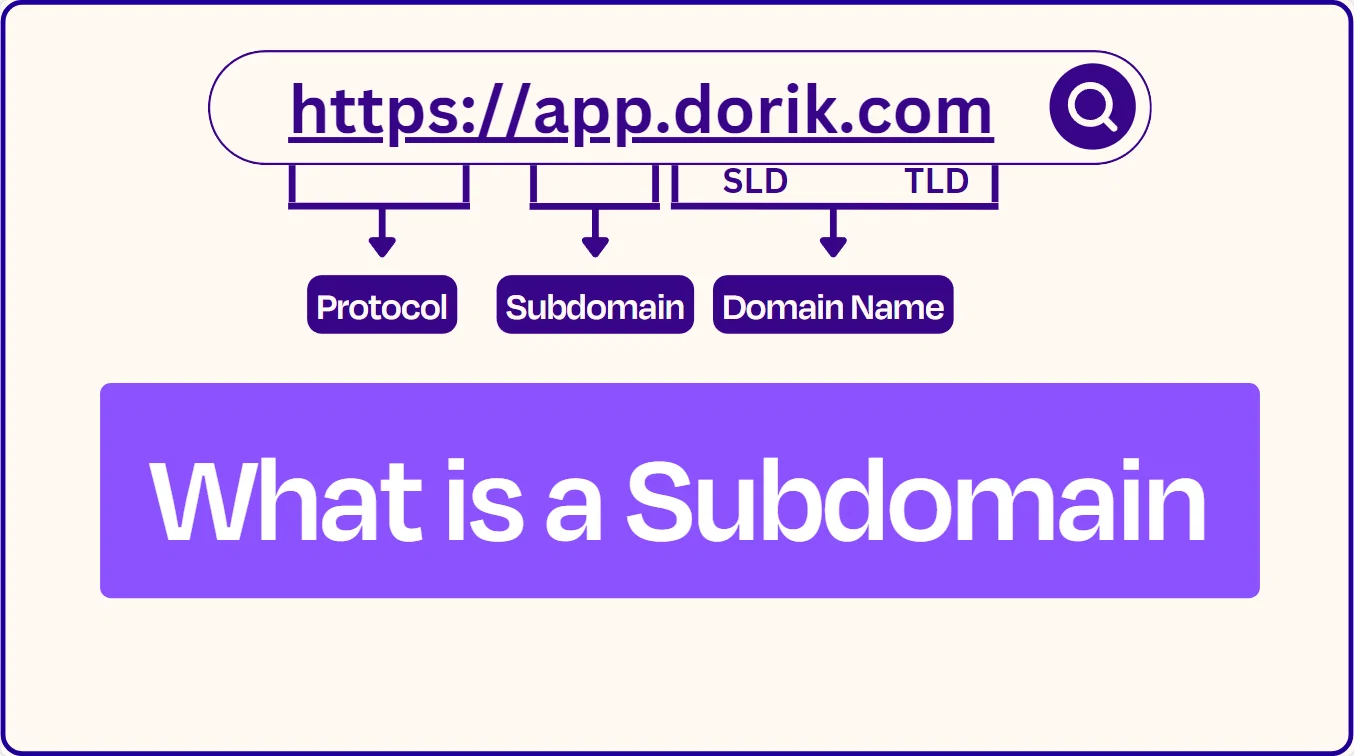
What is a Subdomain?
A subdomain is a smaller section of your main domain that helps organize your website into different parts.
It appears before your main domain name.
👉 Example:
- Main domain: example.com
- Subdomain: blog.example.com
Here, “blog” is the subdomain.
Think of your domain as a company headquarters, and subdomains as different departments within that company—each with its own role, but still connected to the same brand.
How Does It Work?
Subdomains are created through your domain’s DNS (Domain Name System) settings. They act like separate entry points that can lead to different parts of your website or even entirely different systems.
Here’s how it works:
- You register a domain (e.g., yourbusiness.ae)
- You create a subdomain (e.g., shop.yourbusiness.ae)
- You configure DNS records (like A records or CNAME records)
- The subdomain is linked to a server, hosting environment, or cloud service
- When users visit it, they are directed to a specific section or platform
👉 Important to understand:
- A subdomain can point to the same hosting server
- Or a different server
- Or even a cloud-based application (like SaaS tools or dashboards)
In simple terms, subdomains give you flexibility to run multiple systems under one domain.
Why It Matters
Subdomains are especially useful for businesses that want to grow without creating confusion in their website structure.
For UAE-based companies expanding services or targeting different audiences, subdomains offer a clean and scalable solution.
They help you:
- Keep your website organized
- Separate different services
- Build a professional structure
- Scale without buying multiple domains
For example:
- store.company.ae → eCommerce
- support.company.ae → Help center
- mail.company.ae → Email system
Benefits of Using Subdomains
Using subdomains comes with several practical advantages, especially for growing businesses.
Key benefits:
- Better organization
Separate blogs, stores, portals, and apps clearly - Scalability
Add new sections without restructuring your entire website - Flexibility
Host different parts on different servers or platforms - SEO flexibility
Target different keywords or audiences separately - Testing environments
Create staging or development versions (e.g., dev.example.com) - Global expansion
Use regional subdomains like ae.example.com for UAE audiences
Real-Life Example
Let’s say you run a digital agency in the UAE.
Your main website:
👉 creativeagency.ae
Now you want to expand your services:
- Blog → blog.creativeagency.ae
- Client dashboard → clients.creativeagency.ae
- Email system → mail.creativeagency.ae
Each subdomain serves a different purpose but still belongs to the same business.
It’s like having multiple departments under one company name—organized, scalable, and easy to manage.
Common Uses of Subdomains
Subdomains are widely used across websites and platforms.
Popular use cases:
- Blogs → blog.example.com
- Online stores → shop.example.com
- Customer support centers → support.example.com
- Web applications → app.example.com
- Regional targeting → ae.example.com
- Email systems → mail.example.com
They are especially useful when different sections require different technologies or hosting environments.
Subdomain vs Subdirectory
This is one of the most common areas of confusion.
Subdomain vs Subdirectory Comparison
Feature | Subdomain | Subdirectory |
URL Structure | blog.example.com | example.com/blog |
SEO Treatment | Treated separately | Shares main domain authority |
Flexibility | High | Limited |
Hosting Options | Can use different servers | Same server |
Best For | Apps, portals, large systems | Blogs, simple content |
Key takeaway:
- Use subdomains for flexibility and separation
- Use subdirectories for simpler content under one structure
Common Misconceptions
Let’s clear up a few common misunderstandings.
❌ Subdomains are separate domains
They are not. They are part of your main domain.
❌ You need to buy subdomains
No. You can create them for free within your existing domain.
❌ Subdomains harm SEO
Not necessarily. They are treated separately, but can rank well when structured properly.
When You Should NOT Use a Subdomain
Subdomains are powerful—but not always necessary.
You may not need them if:
- Your website is small and simple
- Your content is closely related
- You want to keep all SEO authority in one place
- A subdirectory can do the job easily
In such cases, keeping everything under one domain structure may be better.
Related Concepts
To fully understand subdomains, it helps to connect them with other core web concepts.
Domain Name
Your main website address (e.g., example.ae)
DNS (Domain Name System)
The system that connects domains and subdomains to servers
Web Hosting
Where your website or subdomain content is stored
TLD (Top-Level Domain)
The extension like .ae, .com, .net
Cloud Infrastructure
Subdomains are often used to connect apps, APIs, and cloud systems
Business Email (Google Workspace)
Subdomains like mail.example.com are commonly used in professional email setups
To use subdomains effectively, you also need a properly configured domain, DNS, and hosting environment—these components work together to keep your website running smoothly.