What Is Cloud Hosting? How It Works + Benefits
When people launch a website, online store, or business platform, one of the first things they need is reliable web hosting. But today, traditional hosting is no longer the only option. Modern businesses now need better speed, flexibility, scalability, and uptime — and that’s where cloud hosting comes in. Cloud hosting has become one of […]

When people launch a website, online store, or business platform, one of the first things they need is reliable web hosting. But today, traditional hosting is no longer the only option. Modern businesses now need better speed, flexibility, scalability, and uptime — and that’s where cloud hosting comes in.
Cloud hosting has become one of the fastest-growing hosting solutions for startups, ecommerce businesses, agencies, and enterprises worldwide. Businesses searching for reliable web hosting UAE solutions are increasingly choosing cloud infrastructure because it can handle traffic spikes, improve performance, and reduce downtime.
Whether you are running a company website in Dubai, an ecommerce store in Abu Dhabi, or a growing startup anywhere in the world, understanding cloud hosting can help you choose the right infrastructure for long-term growth.
In this complete beginner-friendly guide, you’ll learn:
- What cloud hosting is
- How cloud hosting works
- Benefits and drawbacks
- How it compares with shared and VPS hosting
- Who should use cloud hosting
- Common mistakes to avoid
- How to choose the best hosting solution for your business
Cloud Hosting at a Glance
Feature | Explanation |
Hosting Type | Distributed cloud infrastructure |
Best For | Growing businesses, ecommerce, startups |
Main Benefit | Scalability and reliability |
Performance | High |
Uptime | Excellent |
Scalability | Flexible and on-demand |
Security | Strong |
Cost | Flexible pricing |
Beginner Friendly | Yes (especially managed cloud hosting) |
Ideal for UAE Businesses? | Absolutely |
What Is Cloud Hosting?
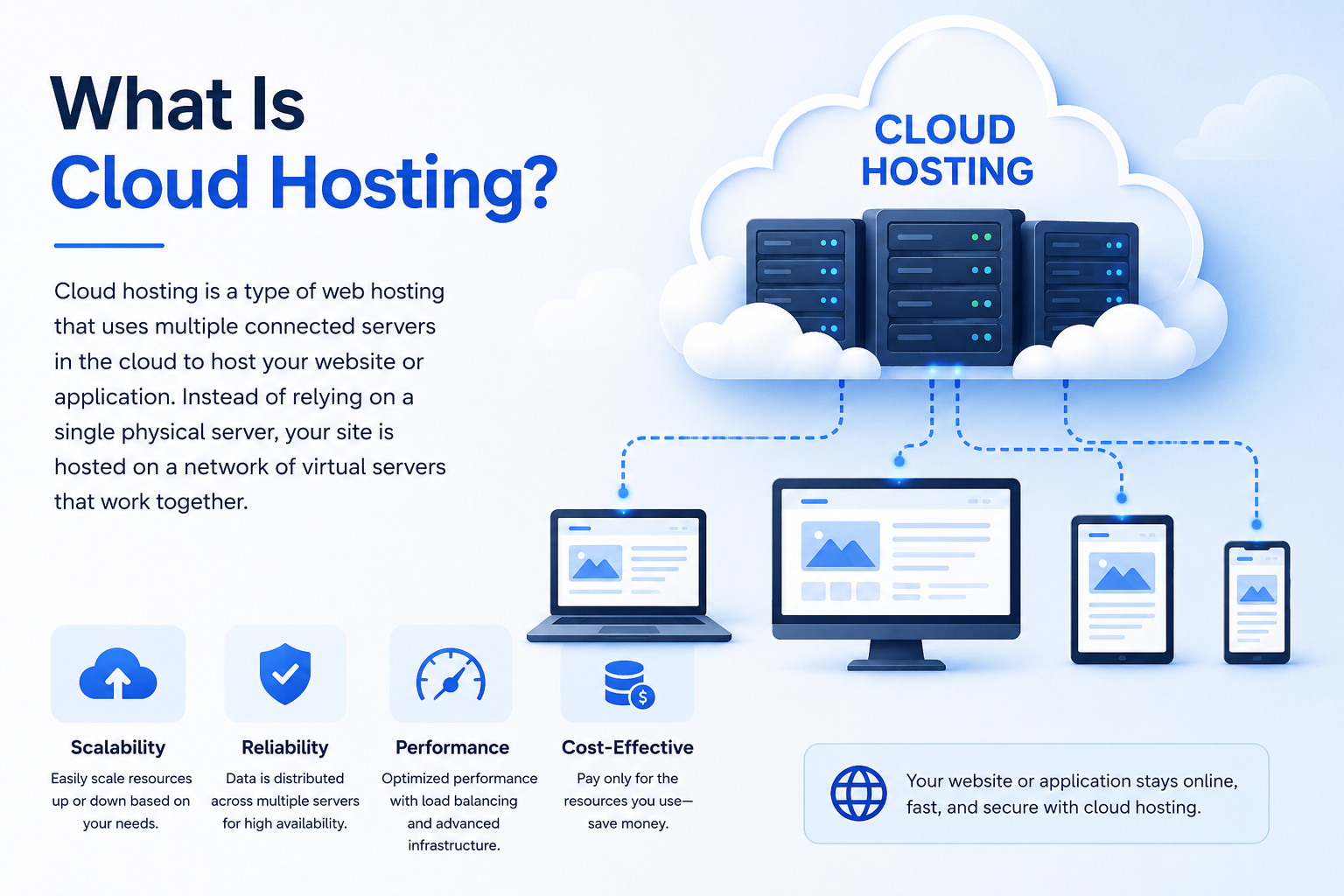
Cloud hosting is a type of web hosting that uses multiple connected servers to host websites and applications instead of relying on a single physical server.
In traditional hosting, your website usually depends on one machine. If that server experiences problems, your website may slow down or go offline.
Cloud hosting works differently.
Your website resources are spread across a network of virtual and physical servers called “the cloud.” If one server has issues, another server can continue handling your website traffic.
Think of it like this:
Traditional hosting is like relying on one generator to power your building.
Cloud hosting is like using an entire power grid where multiple sources work together.
This setup provides:
- Better uptime
- Faster loading speeds
- Higher flexibility
- Easier scaling
- Improved reliability
For businesses looking for stable web hosting services, cloud hosting has become one of the most trusted modern solutions.
How Does Cloud Hosting Work?
Cloud hosting combines virtualization technology with distributed server infrastructure.
Instead of storing everything on one physical server, cloud hosting spreads resources across multiple servers connected through a cloud network.
Here’s how it works in simple terms.
1. Your Website Is Stored Across Multiple Servers
Website files, databases, and applications are stored in a distributed environment rather than one single machine.
This creates redundancy and improves availability.
2. Resources Are Virtualized
CPU, RAM, storage, and bandwidth are created virtually.
This allows hosting providers to allocate resources dynamically whenever needed.
3. Traffic Is Distributed Automatically
Cloud infrastructure uses load balancing to distribute traffic between servers.
This prevents one server from becoming overloaded.
4. Failover Systems Improve Uptime
If one server fails, another server immediately takes over.
This is called failover protection.
It’s one of the main reasons cloud hosting environments usually offer higher uptime than traditional hosting.
5. Resources Can Scale Instantly
One of the biggest advantages of cloud hosting is scalability.
If your website suddenly receives more visitors, the system can increase resources automatically.
This is extremely important for:
- Ecommerce websites
- Viral campaigns
- Seasonal promotions
- Business growth
- High-traffic events
Why Cloud Hosting Matters for Businesses
Modern businesses depend heavily on online services.
A slow or unavailable website can lead to:
- Lost sales
- Poor customer experience
- Reduced trust
- Lower SEO rankings
- Revenue loss
Cloud hosting helps businesses avoid these problems by providing scalable and reliable infrastructure.
This is especially important for companies searching for dependable web hosting in UAE because online competition across Dubai and Abu Dhabi continues growing rapidly.
Real Business Benefits
Better Website Performance
Cloud hosting usually delivers faster page loading speeds because workloads are distributed efficiently across multiple servers.
Faster websites improve:
- User experience
- Mobile browsing
- SEO rankings
- Conversion rates
High Reliability
Distributed infrastructure reduces downtime risks.
Even if one server experiences issues, other servers continue operating.
Flexible Scalability
Businesses can increase or reduce resources depending on demand.
This is ideal for growing companies.
Cost Efficiency
Many cloud hosting plans use flexible billing models where businesses only pay for the resources they use.
Better Remote Accessibility
Cloud-based infrastructure works extremely well for remote teams and hybrid work environments.
Cloud Hosting vs Traditional Hosting
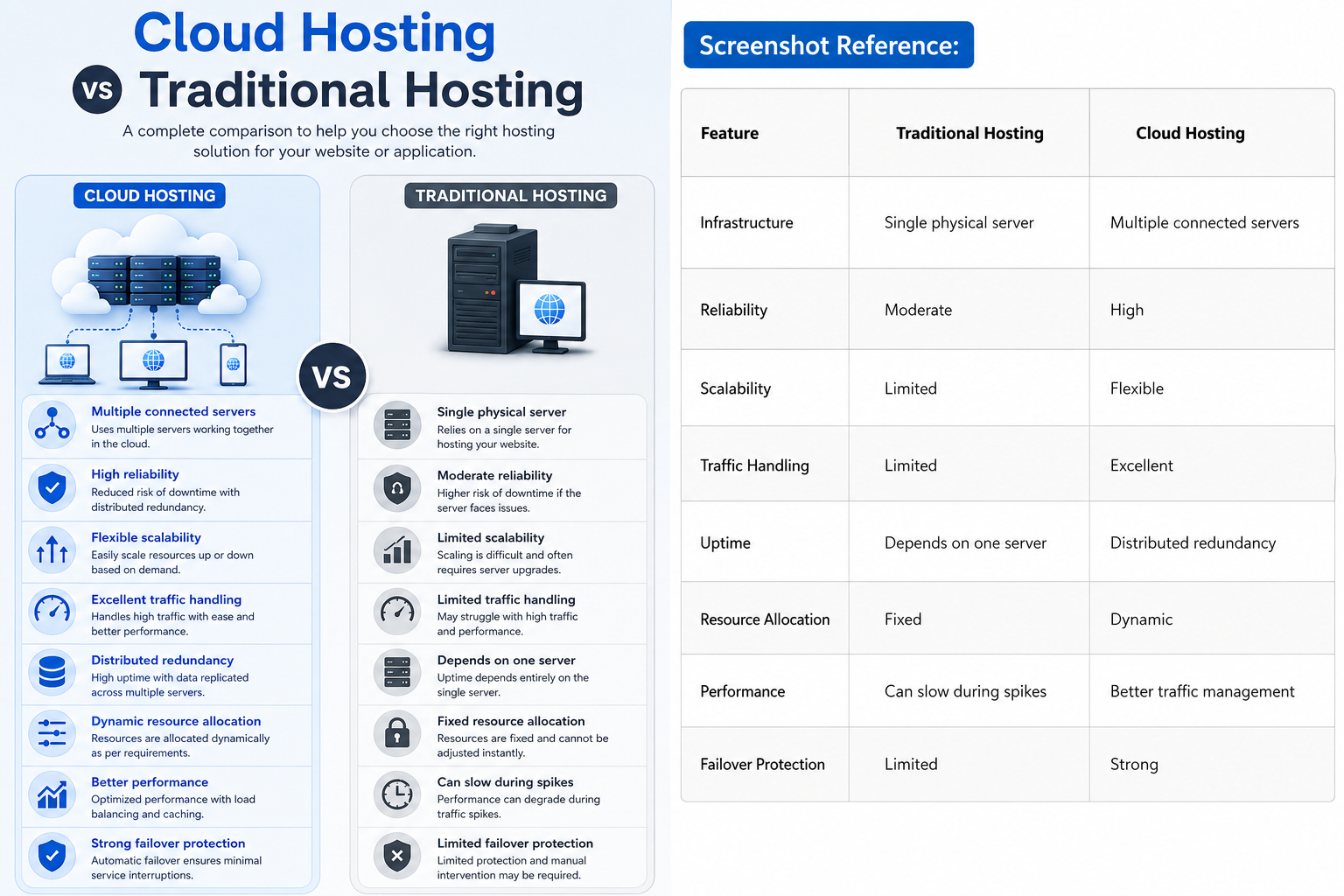
Many beginners confuse cloud hosting with traditional hosting.
Here’s the difference.
Feature | Traditional Hosting | Cloud Hosting |
Infrastructure | Single physical server | Multiple connected servers |
Reliability | Moderate | High |
Scalability | Limited | Flexible |
Traffic Handling | Limited | Excellent |
Uptime | Depends on one server | Distributed redundancy |
Resource Allocation | Fixed | Dynamic |
Performance | Can slow during spikes | Better traffic management |
Failover Protection | Limited | Strong |
Cloud hosting is generally better suited for businesses expecting growth, high traffic, or scalability needs.
Types of Web Hosting
Understanding different hosting types helps businesses choose the right infrastructure.
Shared Hosting
Shared hosting places multiple websites on one server.
It is usually considered the cheapest web hosting option.
Best For
- Small websites
- Personal blogs
- Beginners
- Low-traffic sites
Pros
- Affordable
- Easy to manage
- Beginner-friendly
Cons
- Limited resources
- Slower during high traffic
- Less control
VPS Hosting
VPS stands for Virtual Private Server.
A physical server is divided into virtual environments with dedicated resources.
Best For
- Growing businesses
- Medium-traffic websites
- Developers
- Custom applications
Pros
- Better performance
- More control
- Dedicated resources
Cons
- More expensive than shared hosting
- Requires some technical knowledge
Cloud Hosting
Cloud hosting uses distributed infrastructure and virtualization.
Best For
- Ecommerce websites
- SaaS platforms
- Agencies
- Growing businesses
- High-traffic websites
Pros
- Excellent uptime
- High scalability
- Better performance
- Flexible resources
Cons
- Variable pricing
- Slightly more complex infrastructure
Dedicated Servers
Dedicated hosting provides one entire physical server to a single customer.
Best For
- Enterprise businesses
- Large applications
- Resource-heavy websites
- High-security environments
Pros
- Maximum control
- High performance
- Strong security
Cons
- Higher cost
- Advanced management requirements

Cloud Hosting vs Shared Hosting vs VPS Hosting
Feature | Shared Hosting | VPS Hosting | Cloud Hosting |
Cost | Low | Medium | Flexible |
Performance | Basic | Good | Excellent |
Scalability | Limited | Moderate | High |
Uptime | Moderate | Better | Excellent |
Traffic Handling | Low | Medium | High |
Control | Limited | Advanced | Flexible |
Best For | Small sites | Growing websites | Businesses & ecommerce |
Benefits of Cloud Hosting
Cloud hosting offers several major advantages compared to traditional hosting environments.
1. Excellent Uptime
Cloud infrastructure reduces downtime because multiple servers work together.
This helps businesses stay online consistently.
2. Scalability
Resources can scale instantly during traffic spikes.
This is ideal for:
- Ecommerce sales
- Marketing campaigns
- Seasonal traffic
- Business growth
3. Faster Performance
Cloud hosting environments usually provide:
- Faster loading times
- Better database performance
- Improved application speed
4. Better Security
Many cloud hosting providers include:
- Firewalls
- SSL protection
- DDoS mitigation
- Automated backups
- Security monitoring
- Disaster recovery systems
5. Resource Flexibility
Businesses can customize server resources more easily compared to traditional hosting.
6. Better Reliability
Cloud hosting uses redundancy and failover systems to improve stability.
Pros and Cons of Cloud Hosting
Like every technology, cloud hosting has advantages and disadvantages.
Pros
- High uptime
- Easy scalability
- Better traffic handling
- Strong performance
- Flexible infrastructure
- Improved reliability
Cons
- Can cost more than shared hosting
- Pricing models may vary
- Advanced setups may require technical expertise
- Poorly optimized cloud setups can become expensive
Balanced decision-making is important when choosing hosting infrastructure.
Who Should Use Cloud Hosting?
Cloud hosting is ideal for businesses that expect growth or need reliable infrastructure.
Best Fit For
Ecommerce Stores
Online stores need strong uptime and traffic management.
Startups
Cloud hosting helps startups scale quickly without changing infrastructure.
Agencies
Agencies hosting multiple client websites benefit from flexible resources.
SaaS Businesses
Software platforms often require scalable infrastructure.
Growing WordPress Websites
Businesses using web hosting WordPress environments often choose cloud hosting for better speed and reliability.
Enterprise Businesses
Large companies benefit from distributed infrastructure and failover systems.
Why UAE Businesses Prefer Cloud Hosting
Businesses across the UAE are rapidly adopting cloud technologies.
Several factors are driving this shift.
Ecommerce Growth
Dubai and Abu Dhabi businesses are seeing increased online demand.
Reliable infrastructure is now essential.
Digital Transformation
More companies are moving operations online.
Remote Work Trends
Cloud infrastructure supports hybrid and remote teams effectively.
Scalability for Startups
Startups need infrastructure that grows with them.
This has increased demand for:
- web hosting Dubai
- web hosting company Dubai
- web hosting companies in UAE
- web hosting services in Dubai
- best web hosting in UAE
especially among growing SMEs.
Real-Life UAE Business Example
Imagine a Dubai-based fashion ecommerce business preparing for Ramadan promotions.
During normal days, the website receives moderate traffic.
But during Ramadan sales campaigns, thousands of visitors may arrive at the same time.
With traditional hosting, the website might:
- Slow down
- Crash
- Lose orders
- Create poor customer experiences
With cloud hosting, resources scale automatically during traffic spikes.
This helps the business maintain:
- Faster checkout speeds
- Better uptime
- Improved customer trust
- Higher sales conversions
This is one reason many businesses searching for web hosting company in Dubai solutions now prefer cloud environments.
Cloud Hosting Security Explained
Security is one of the biggest reasons businesses move toward cloud infrastructure.
Modern cloud hosting platforms often include multiple security layers.
Common Security Features
SSL Certificates
Encrypt communication between users and websites.
Firewalls
Protect servers from malicious traffic.
DDoS Protection
Helps defend against large-scale attacks.
Automated Backups
Allow businesses to restore data quickly if needed.
Disaster Recovery Systems
Help maintain uptime during failures or emergencies.
Monitoring Tools
Detect unusual activity early.
Security should always be part of your hosting decision process.
How to Choose the Right Cloud Hosting
Choosing the right hosting provider depends on your business goals and technical requirements.
Understand Your Website Needs
Consider:
- traffic levels
- storage requirements
- applications
- growth expectations
Check Performance Infrastructure
Look for:
- SSD storage
- uptime guarantees
- scalable resources
- modern server infrastructure
Evaluate Support Quality
A reliable web hosting company should provide responsive technical support.
This is especially important for businesses without in-house IT teams.
Compare Scalability Options
Choose a provider that makes upgrades easy.
Understand Pricing Models
Some providers use:
- fixed pricing
- pay-as-you-go billing
- resource-based pricing
Compare carefully.
Many businesses evaluating:
- best web hosting
- managed cloud solutions
- lifetime web hosting
- scalable infrastructure
often prioritize long-term reliability over the cheapest price.
Common Cloud Hosting Mistakes
Many businesses make avoidable hosting mistakes.
Choosing Only Based on Price
Cheap hosting may lack performance and reliability.
Ignoring Scalability
Some businesses outgrow their hosting too quickly.
Not Checking Backup Policies
Always verify backup and disaster recovery systems.
Underestimating Support Quality
Technical support matters during emergencies.
Ignoring Security Features
Security should never be treated as optional.
Common Misconceptions About Cloud Hosting
“Cloud Hosting Is Only for Large Companies”
Small businesses and startups also benefit greatly from cloud infrastructure.
“Cloud Hosting Is Too Expensive”
Cloud hosting can actually reduce costs through flexible resource allocation.
“It’s Too Technical”
Many providers now offer managed cloud hosting that simplifies maintenance.
“Cloud Means Unlimited Resources”
Cloud hosting improves scalability, but plans still have resource limits.
Related Concepts You Should Understand
Cloud hosting connects with several important web technologies.
Domain Registration
A domain name is your website address, such as .ae or .com.
Businesses often combine hosting with domain registration services.
DNS (Domain Name System)
DNS connects domain names to hosting servers.
TLD and SLD
- TLD = .com, .ae
- SLD = your business name
Cloud Infrastructure
Cloud infrastructure includes:
- virtual servers
- storage systems
- networking
- load balancing
- failover systems
Google Workspace Solutions
Many businesses combine cloud hosting with Google Workspace for:
- business email
- collaboration
- cloud storage
- team communication
Offshore Hosting and Cloud Hosting
Some companies also research offshore web hosting solutions for infrastructure or regulatory reasons.
However, most businesses should prioritize:
- uptime
- support quality
- performance
- scalability
- security
- server reliability
over marketing claims.
Amazon Web Hosting and Major Cloud Providers
Large cloud infrastructure providers power many hosting environments worldwide.
One major example is Amazon Web Services, often associated with amazon web hosting.
Other major cloud providers include:
- Google Cloud
- Microsoft Azure
Many modern hosting providers build their services on top of these cloud platforms.