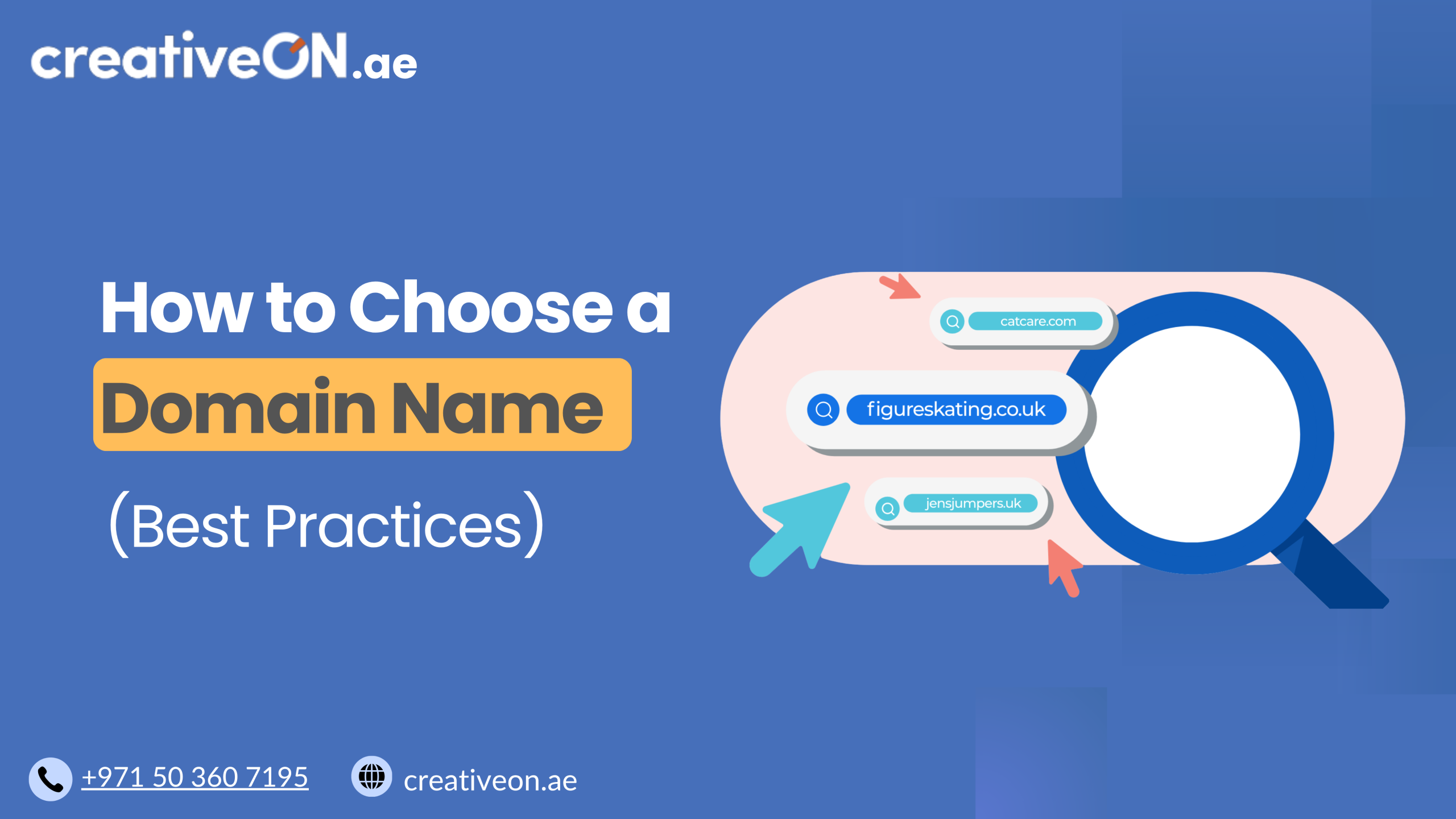
How to Choose a Domain Name (Best Practices)
Introduction Choosing a domain name often looks simple from the outside. You think of a name, check availability, and register it. But in practice, most of the good names are already taken, and many of the available ones either feel too complicated, too long, or not suitable for long-term use. A domain name is not […]
Introduction
Choosing a domain name often looks simple from the outside. You think of a name, check availability, and register it. But in practice, most of the good names are already taken, and many of the available ones either feel too complicated, too long, or not suitable for long-term use.
A domain name is not just a web address. It becomes your identity online. People remember it, type it, recommend it, and judge your credibility based on it. A confusing or hard-to-remember domain can quietly reduce traffic, while a clear and natural one can make your website easier to grow from day one.
This guide focuses on real-world domain selection thinking—not theory. You will see how people actually make decisions, what mistakes they usually make, and how to avoid ending up with a domain you later regret.
Start With Meaning Before Availability
One of the most common mistakes is starting with “what is available” instead of “what makes sense.”
Many beginners open a domain search tool and start testing random combinations. This often leads to names that are:
- unnatural
- overly long
- hard to explain
- unrelated to the actual idea
A better approach is to first define what the domain should represent:
- a personal brand
- a business service
- a niche topic
- a product or idea
For example, instead of forcing availability, start with meaning:
- A photography brand → something visual, creative, or identity-based
- A bakery → something warm, simple, food-related
- A tech service → something clean, modern, and minimal
Once meaning is clear, the naming becomes more structured instead of random.
Keep It Simple Enough to Say Once and Remember
In real-world use, domain names are often shared verbally:
- in meetings
- over calls
- in messages
- in referrals
If someone hears your domain once and cannot repeat it correctly, you lose traffic.
Good examples feel natural:
- desertlane.com
- pixelcraft.ae
- northbridge.co
Problematic examples usually require explanation:
- mykree8tivehub.com
- the-best-web-solutions-4u.com
A simple test is this:
Say the domain out loud once. If the other person can type it correctly without asking questions, it is a strong candidate.
Short Does Not Mean Artificially Short
People often assume a domain must be extremely short to be good. That is not true.
The goal is not minimal length—it is easy processing.
A slightly longer but readable name is better than a short but confusing one.
Compare:
- greenfieldstudio.com ✔
- gfstd.io ✖ (hard to understand)
- greenfieldstudiosolutions.com ⚠ (too long)
The best range is usually:
- 1 to 3 clear words
- no unnecessary fillers
- no forced abbreviations
The Reality of “Good Names Are Already Taken”
At this stage, most people get stuck. They assume all good names are gone.
What actually works in practice is not inventing random spellings—but combining real words in meaningful ways.
Instead of:
- xqztechsolutions.com
Try combinations like:
- northpeakdigital.com
- blueoakstudio.com
- silverlineworks.com
These feel natural because they use real words with simple structure.
A useful mental shift:
You are not finding a perfect word—you are building a name that feels real.
Avoid These Common Domain Mistakes (Real Cases)
These are mistakes seen repeatedly in real projects:
1. Trend-based names
Names built around temporary trends often feel outdated within a few years.
2. Overly specific names
Example:
bestdubaiphonerepairshop.com
This becomes limiting if the business expands.
3. Spelling creativity gone wrong
Replacing letters may seem modern but often reduces memorability:
- fone instead of phone
- kwik instead of quick
4. Copying competitors too closely
This leads to confusion and weak brand identity.
5. Ignoring how it looks in real use
A domain may look fine in writing but feel awkward in:
- WhatsApp messages
- social media handles
- mobile typing
Think Beyond the First Version of Your Idea
A strong domain name should survive changes in your business direction.
Many businesses fail to consider this early.
For example:
- dubaishoesrepair.com → too narrow
- emiratesrepairhub.com → more flexible
Even if you start small, your domain should allow:
- expansion
- new services
- audience growth
A restrictive domain becomes a long-term limitation.
Domain Extensions Matter More Than People Think
The extension is part of trust perception.
.com
Still the most widely recognized globally. People naturally trust it.
.ae
Strong choice for UAE-focused businesses. It signals local relevance and credibility.
Other extensions
- .tech
- .online
- .store
These can work, but they depend more on branding strength and user familiarity.
A simple principle:
Choose the extension your audience already expects.
Keywords in Domain Names: What Actually Matters
Many people still believe exact-match keywords improve SEO significantly.
In reality:
- keywords in domains are no longer a strong ranking factor
- user trust and brand recognition matter more
- readability is more important than keyword stuffing
Compare:
- bestcheaphostinguae.com
- cloudnest.ae
The second one is more brandable and easier to trust.
Keywords are fine if they naturally fit—but they should never control the entire naming decision.
Social Media Availability Check (Often Ignored Step)
A domain does not exist in isolation.
Before finalizing, check if matching usernames are available on:
For example:
- domain: brightoak.ae
- Instagram: @brightoak ✔ (consistent)
This consistency helps users recognize your brand across platforms without confusion.
A Practical Domain Selection Process (Real Workflow)
This is how experienced creators and businesses typically choose domains:
Step 1: Define purpose clearly
What is the website for?
Step 2: List natural words
Write words related to your niche, identity, or emotion.
Step 3: Combine words naturally
Avoid forcing creativity. Keep it realistic.
Step 4: Filter for simplicity
Remove:
- hard spelling
- long phrases
- awkward combinations
Step 5: Check availability
Only now move to domain search.
Step 6: Test verbally
Say it out loud to someone.
Step 7: Check brand consistency
Look at social media availability.
This process removes emotional guessing and replaces it with structured decision-making.
Before You Register: Quick Checklist
Before buying a domain, confirm:
- It is easy to pronounce
- It is easy to spell
- It works on mobile typing
- It does not rely on explanation
- It has no trademark conflict
- It still makes sense if your business grows
- It sounds natural when spoken aloud
If even two of these fail, it is worth reconsidering.
FAQ
Not always. .com is more universal, but local extensions like .ae can be better for regional businesses because they improve trust and relevance.
Only if they fit naturally. Keyword-heavy domains are no longer necessary for SEO and often reduce brand quality.
Yes, but it is not ideal. Changing a domain later can affect branding, traffic, and user trust, so it is better to choose carefully from the beginning.
Usually 1–3 simple words. The focus should be readability, not strict character limits.
Conclusion
A good domain name is not about creativity alone, and it is not about chasing the last available option either. It is about finding a balance between clarity, simplicity, and long-term usefulness.
The strongest domain names usually share one thing in common—they feel natural the moment you hear them. No explanation needed, no confusion, no second guessing.
If your domain can pass that test, it is already strong enough to build on.