Shared Hosting vs VPS Hosting – Which Is Better?
Choosing the right hosting plan is one of the most important decisions for any website owner. The hosting environment you select directly affects your website’s speed, stability, security, scalability, and overall user experience. Many beginners start by comparing shared hosting vs VPS hosting because both are popular and affordable options. But while they may look […]
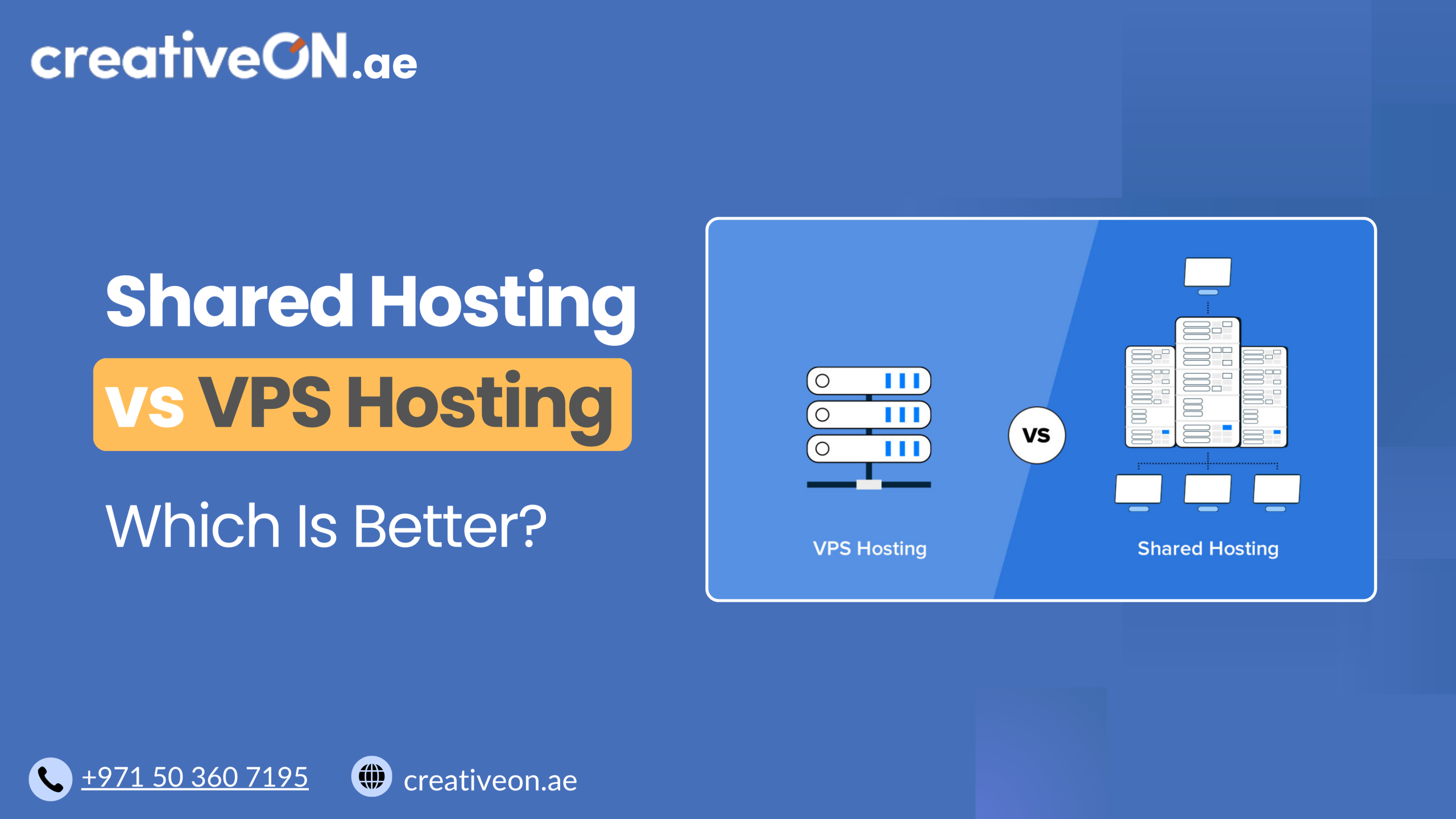
Choosing the right hosting plan is one of the most important decisions for any website owner. The hosting environment you select directly affects your website’s speed, stability, security, scalability, and overall user experience.
Many beginners start by comparing shared hosting vs VPS hosting because both are popular and affordable options. But while they may look similar on the surface, they are designed for very different website needs.
Some websites perform perfectly well on shared hosting for years. Others quickly outgrow shared resources and require the power and flexibility of VPS hosting. The challenge is knowing which option actually fits your website today — and which one will support your growth tomorrow.
In this guide, we’ll explain the real differences between shared hosting and VPS hosting in simple language. You’ll learn how each hosting type works, where each one performs best, the advantages and limitations of both, and how to decide which hosting environment is better for your business or project.
CreativeON.ae, the UAE-focused subsidiary of CreativeON.com, provides web hosting services, VPS hosting solutions, cloud hosting infrastructure, dedicated servers, domain registration services, and business email hosting backed by more than 20 years of infrastructure experience.
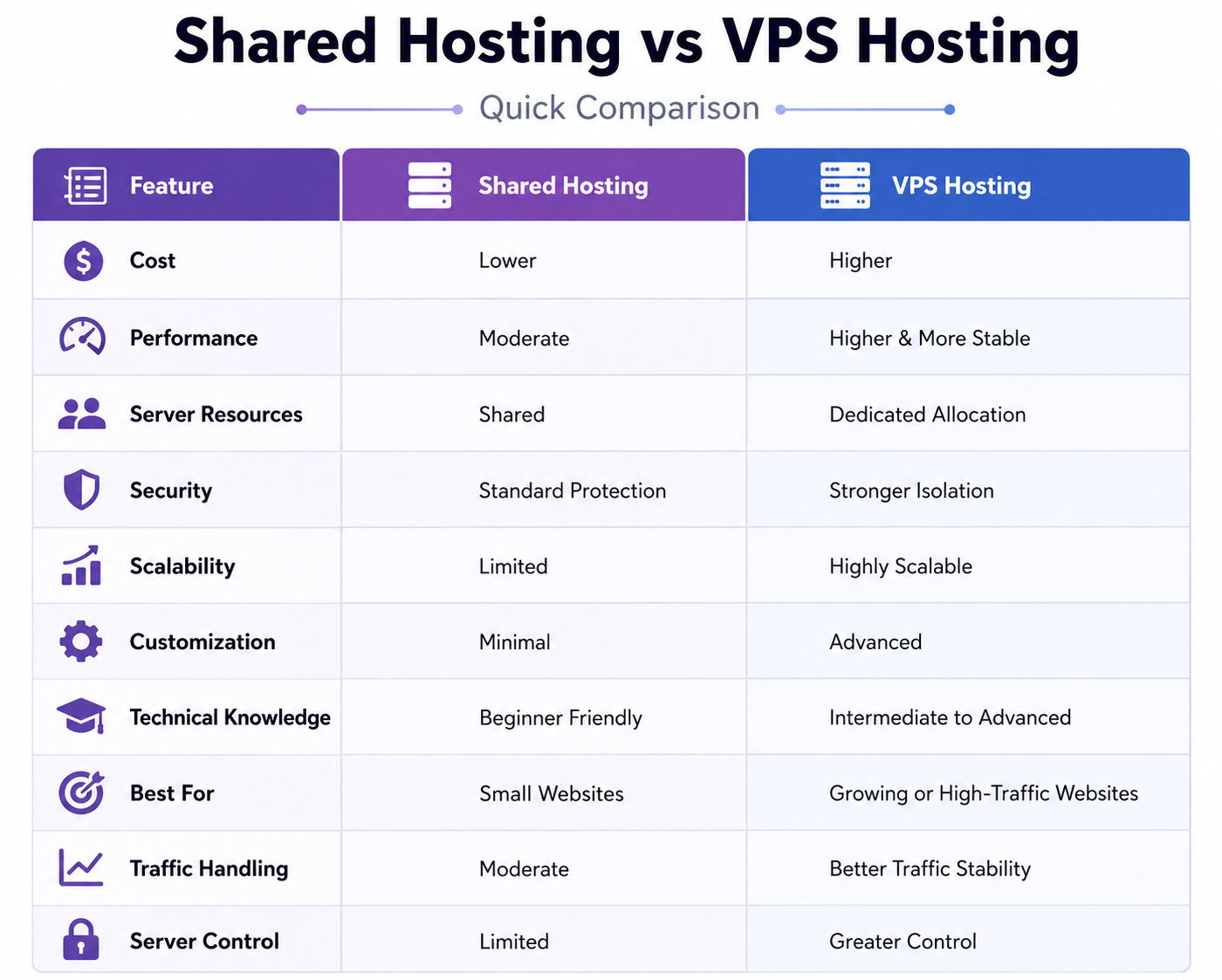
Shared Hosting vs VPS Hosting – Quick Comparison
Feature | Shared Hosting | VPS Hosting |
Cost | Lower | Higher |
Performance | Moderate | Higher & More Stable |
Server Resources | Shared | Dedicated Allocation |
Security | Standard Protection | Stronger Isolation |
Scalability | Limited | Highly Scalable |
Customization | Minimal | Advanced |
Technical Knowledge | Beginner Friendly | Intermediate to Advanced |
Best For | Small Websites | Growing or High-Traffic Websites |
Traffic Handling | Moderate | Better Traffic Stability |
Server Control | Limited | Greater Control |
What Is Shared Hosting?
Shared hosting is a hosting environment where many websites share the same physical server and its resources.
This includes shared access to:
- CPU power
- RAM
- Disk storage
- Bandwidth
- Server software
You can think of shared hosting like living in a large apartment building where everyone shares the same infrastructure.
Because hosting costs are divided among many users, shared hosting is usually the most affordable hosting option available.
It is commonly used for:
- Personal blogs
- Small business websites
- Portfolio sites
- Startup websites
- Informational WordPress websites
- Small UAE business websites with moderate traffic
Most shared hosting plans also include beginner-friendly tools such as:
- cPanel
- One-click WordPress installation
- Email hosting
- SSL certificates
- Automatic backups
This simplicity makes shared hosting a very popular starting point for new website owners.
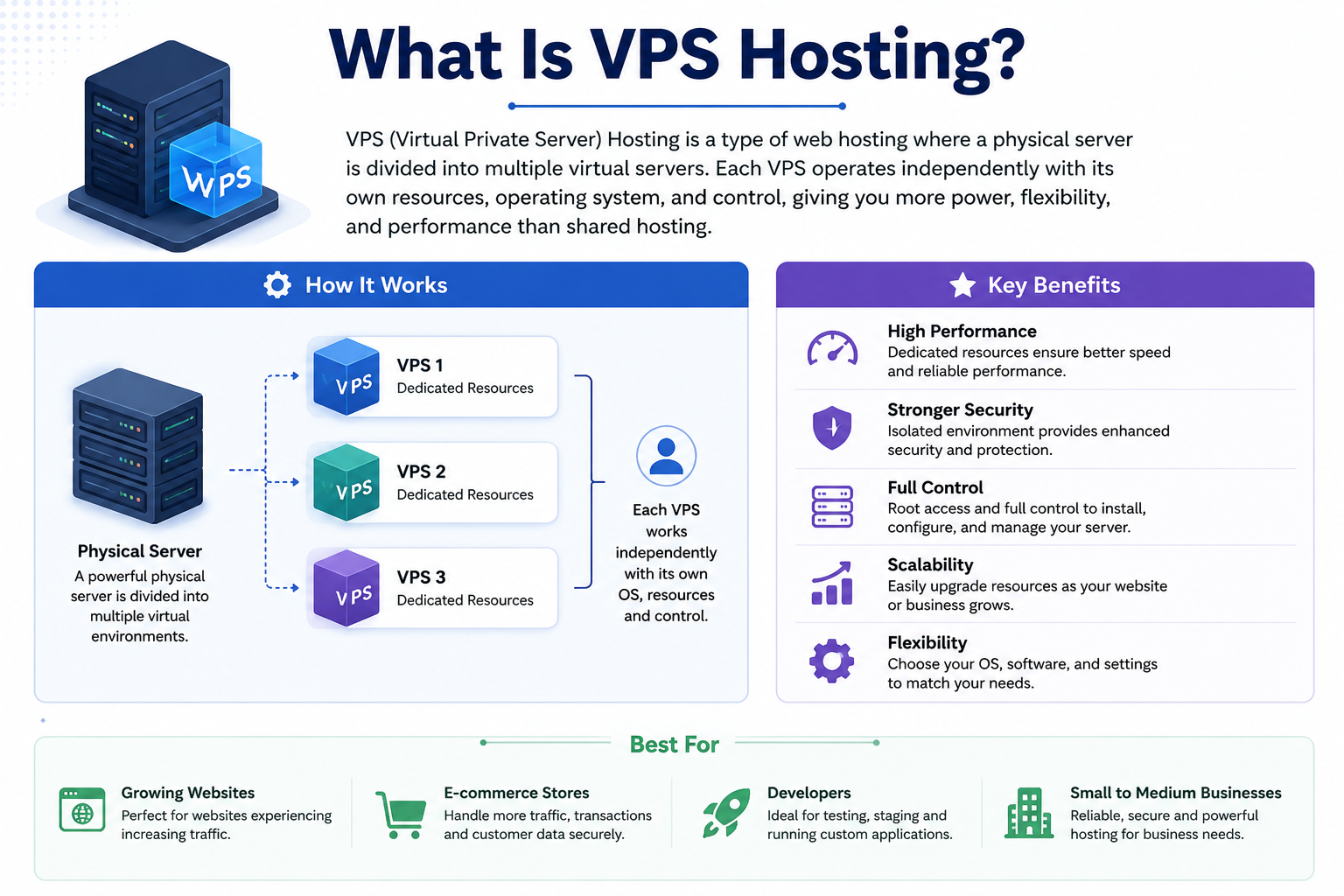
What Is VPS Hosting?
VPS stands for Virtual Private Server.
In VPS hosting, a physical server is divided into multiple isolated virtual servers using virtualization technology. Each VPS environment receives its own dedicated allocation of server resources.
Unlike shared hosting, your VPS resources are not directly shared with neighboring accounts.
This usually includes:
- Dedicated RAM
- Reserved CPU resources
- Isolated operating environment
- Greater server-level control
You can think of VPS hosting like owning a private apartment instead of sharing a crowded hostel room.
VPS hosting is commonly used for:
- Ecommerce stores
- Growing business websites
- Web applications
- Agency hosting environments
- High-traffic WordPress websites
- Custom software deployments
- Multiple website hosting
For businesses where website performance directly affects customer experience and revenue, VPS hosting often becomes a more reliable long-term solution.
Is VPS Better Than Shared Hosting?
VPS hosting is generally better for performance, scalability, customization, and security, while shared hosting is better for affordability, simplicity, and beginner-friendly management.
The better option depends entirely on your website’s size, traffic levels, technical requirements, and future growth plans.
For many websites, shared hosting is the ideal starting point. For growing websites and resource-heavy applications, VPS hosting often becomes the better choice over time.
How Shared Hosting and VPS Hosting Actually Differ
The biggest difference between shared hosting and VPS hosting is how server resources are allocated.
In shared hosting:
- Multiple websites compete for the same server resources.
- Heavy activity from neighboring websites may affect performance.
- Server configurations are usually standardized.
In VPS hosting:
- Resources are allocated specifically to your virtual environment.
- Other users cannot directly consume your reserved RAM or CPU allocation.
- You gain more control over performance tuning and software configuration.
This difference affects:
- Website loading speed
- Stability during traffic spikes
- Security isolation
- Scalability
- Hosting flexibility
Understanding CPU and RAM in Hosting
Many hosting comparisons mention CPU and RAM, but beginners often do not fully understand why they matter.
RAM affects how many tasks your website can handle simultaneously. Websites with many visitors, plugins, or active sessions usually require more RAM.
CPU power affects how quickly the server processes requests and executes website operations.
For example:
- Dynamic ecommerce stores consume more CPU resources
- Large WordPress plugins increase RAM usage
- High-traffic websites require better resource stability
This is why growing websites often move from shared hosting to VPS hosting as resource demands increase.
Shared Hosting Performance
Shared hosting performs well for smaller websites with moderate traffic and lightweight applications.
Modern shared hosting providers now use technologies such as:
- NVMe SSD storage
- LiteSpeed web servers
- Advanced caching systems
- Resource isolation tools
These improvements have made shared hosting significantly faster than older hosting environments.
However, because resources are shared, performance consistency can still vary.
If another website on the same server suddenly experiences heavy traffic or abnormal CPU usage, neighboring websites may temporarily slow down. This is commonly known as the “noisy neighbor effect.”
In real-world hosting environments, many websites perform perfectly well on shared hosting until traffic or application complexity begins increasing significantly.
VPS Hosting Performance
VPS hosting delivers more stable and predictable performance because resources are isolated within your virtual server environment.
This becomes especially important for:
- WooCommerce websites
- Membership platforms
- Booking systems
- Learning management systems
- Large databases
- High-concurrency traffic environments
VPS hosting also allows advanced optimization possibilities such as:
- Custom caching configurations
- Dedicated firewall setups
- Performance tuning
- Custom software installation
- Server-level optimization
For websites where speed directly affects conversions or customer trust, VPS hosting often provides noticeable performance improvements.
Why Some Websites Outgrow Shared Hosting
Many websites do not need VPS hosting immediately.
However, websites often outgrow shared hosting when:
- Traffic increases consistently
- WordPress plugins become heavier
- Database activity grows
- Ecommerce functionality expands
- Multiple websites are hosted together
- Performance expectations become higher
Common signs include:
- Slow loading times
- Website lag during traffic spikes
- Resource limit warnings
- Admin dashboard slowdowns
- Temporary downtime
- Delayed checkout performance
At that stage, upgrading to VPS hosting usually improves stability and user experience.
Security Differences Between Shared Hosting and VPS Hosting
Shared Hosting Security
Shared hosting providers implement server-wide security protections to protect all hosted websites.
This often includes:
- Malware scanning
- Firewalls
- Account isolation
- SSL support
- Automatic updates
For most standard websites, shared hosting security is usually sufficient when combined with:
- Strong passwords
- Updated plugins
- Reliable backups
- Security plugins
However, because websites exist within a shared environment, neighboring account problems can occasionally impact overall server stability or IP reputation.
VPS Hosting Security
VPS hosting provides stronger isolation because your virtual server operates independently from neighboring environments.
This greatly reduces risks related to:
- Resource abuse
- Cross-account impact
- Shared environment instability
VPS hosting also gives more control over:
- Firewall configuration
- Access permissions
- Security software
- Server hardening
- Custom security policies
This is particularly valuable for:
- Ecommerce businesses
- Customer portals
- Payment systems
- Business-critical applications
For UAE businesses handling customer transactions online, stronger hosting isolation can improve operational reliability and trust.
Managed VPS vs Unmanaged VPS
Many users comparing hosting plans become confused when they see managed VPS and unmanaged VPS options.
The difference is simple.
Managed VPS Hosting
With managed VPS hosting, the hosting provider handles:
- Server maintenance
- Security updates
- Monitoring
- Technical troubleshooting
- Performance optimization
This is ideal for businesses that want VPS performance without managing servers themselves.
Unmanaged VPS Hosting
With unmanaged VPS hosting, the customer manages:
- Server configuration
- Security setup
- Software installation
- Troubleshooting
- Updates
This option is usually better suited for developers, system administrators, and advanced users.
For most growing businesses, managed VPS hosting is often the safer and more practical option.
Scalability Comparison
Shared Hosting Scalability
Shared hosting has limited scalability because resources are shared among many users.
As websites grow, they may eventually hit limits related to:
- CPU usage
- RAM usage
- Concurrent processes
- Database activity
- Traffic handling
While shared hosting is excellent for early-stage growth, it is not always suitable for rapidly expanding websites.
VPS Hosting Scalability
VPS hosting is designed for scalable growth.
Most VPS hosting plans allow upgrades to:
- RAM
- CPU cores
- Storage
- Bandwidth
without requiring full server migration.
This makes VPS hosting more suitable for:
- UAE ecommerce stores
- Expanding agencies
- SaaS platforms
- Business applications
- High-growth startups
Shared Hosting vs VPS Hosting for WordPress
Small WordPress websites usually perform well on optimized shared hosting.
However, WordPress websites often become resource-heavy over time due to:
- Large plugins
- WooCommerce functionality
- Page builders
- Dynamic content
- High visitor activity
VPS hosting becomes beneficial when WordPress performance starts slowing down consistently.
For businesses depending heavily on WordPress for sales or lead generation, scalable hosting environments often provide better long-term reliability.
Shared Hosting vs VPS Hosting for Ecommerce
Ecommerce websites consume significantly more resources than standard informational websites.
Online stores process:
- Customer sessions
- Shopping carts
- Payment requests
- Inventory queries
- Database operations
While small ecommerce websites may initially run on shared hosting, growing stores often benefit from VPS hosting for:
- Faster checkout performance
- Better uptime stability
- Improved customer experience
- Stronger traffic handling
This is especially important during:
- Promotions
- Seasonal traffic spikes
- UAE ecommerce campaigns
- High-volume sales periods
Which Hosting Type Fits Your Situation?
Choose Shared Hosting If:
Shared hosting is usually the better option if:
- You are launching your first website
- Your traffic is still relatively low
- You want affordable hosting
- You prefer easy management
- Your website is lightweight
- You do not require advanced server customization
Choose VPS Hosting If:
VPS hosting is usually the better choice if:
- Your website generates business revenue
- You run WooCommerce or ecommerce systems
- You host multiple websites
- Website speed affects customer experience
- You need stronger performance consistency
- You expect rapid traffic growth
- You require greater server control
Common Mistakes When Choosing Hosting
Many website owners choose hosting based only on price and later experience performance problems.
Some of the most common mistakes include:
Choosing Hosting Only by Cost
Cheap hosting may not provide enough resources for growing websites.
Ignoring Future Growth
A website that grows quickly may outgrow shared hosting sooner than expected.
Buying VPS Without Technical Knowledge
Unmanaged VPS hosting can become difficult for beginners without server administration experience.
Overpaying for Resources You Do Not Need
Not every website requires VPS hosting immediately.
Many small websites perform perfectly well on optimized shared hosting.
Ignoring Backup and Security Policies
Reliable backups and server security are just as important as speed and pricing.
Is It Difficult to Upgrade From Shared Hosting to VPS?
In most cases, upgrading from shared hosting to VPS hosting is straightforward.
Many hosting providers offer:
- Managed migration assistance
- Website transfer services
- Minimal downtime migration
- Technical support during upgrades
This means businesses can start on shared hosting and later move to VPS hosting as their requirements grow.
For many real-world websites, this gradual upgrade path is completely normal.
Pricing Comparison
Shared Hosting Pricing
Shared hosting is usually the lowest-cost hosting solution because server resources are distributed among many users.
It is ideal for:
- Beginners
- Small websites
- Startup projects
- Budget-conscious businesses
VPS Hosting Pricing
VPS hosting costs more because resources are reserved specifically for your virtual environment.
Pricing depends on:
- RAM allocation
- CPU resources
- Storage type
- Managed vs unmanaged setup
- Backup services
- Infrastructure quality
Although VPS hosting is more expensive, it often becomes cost-effective for websites where performance and uptime directly affect business operations.
Can VPS Hosting Improve Website Speed?
Yes, VPS hosting can improve website speed, especially for growing or resource-heavy websites.
Because VPS hosting provides isolated resources, websites often experience:
- Faster processing
- Better stability during traffic spikes
- Improved database performance
- Reduced slowdowns from neighboring accounts
However, hosting alone is not the only factor affecting speed.
Website optimization also matters, including:
- Caching
- Image optimization
- CDN usage
- Lightweight themes
- Database optimization
Shared Hosting vs VPS Hosting – Final Verdict
Shared hosting is an excellent starting point for beginners, startups, blogs, and small business websites that need affordable and simple website hosting.
VPS hosting, on the other hand, delivers stronger performance, scalability, customization, and resource stability for growing businesses and demanding applications.
There is no universal winner.
The best hosting solution depends on:
- Your website goals
- Traffic expectations
- Technical requirements
- Business growth plans
- Budget
In real-world hosting environments, many websites naturally progress from shared hosting to VPS hosting as traffic and complexity increase.
CreativeON.ae, backed by the infrastructure expertise of CreativeON.com, provides scalable web hosting services in UAE including shared hosting, VPS server hosting, cloud hosting infrastructure, dedicated server hosting, domain registration services, and business email hosting solutions for startups, SMEs, agencies, and growing online businesses.