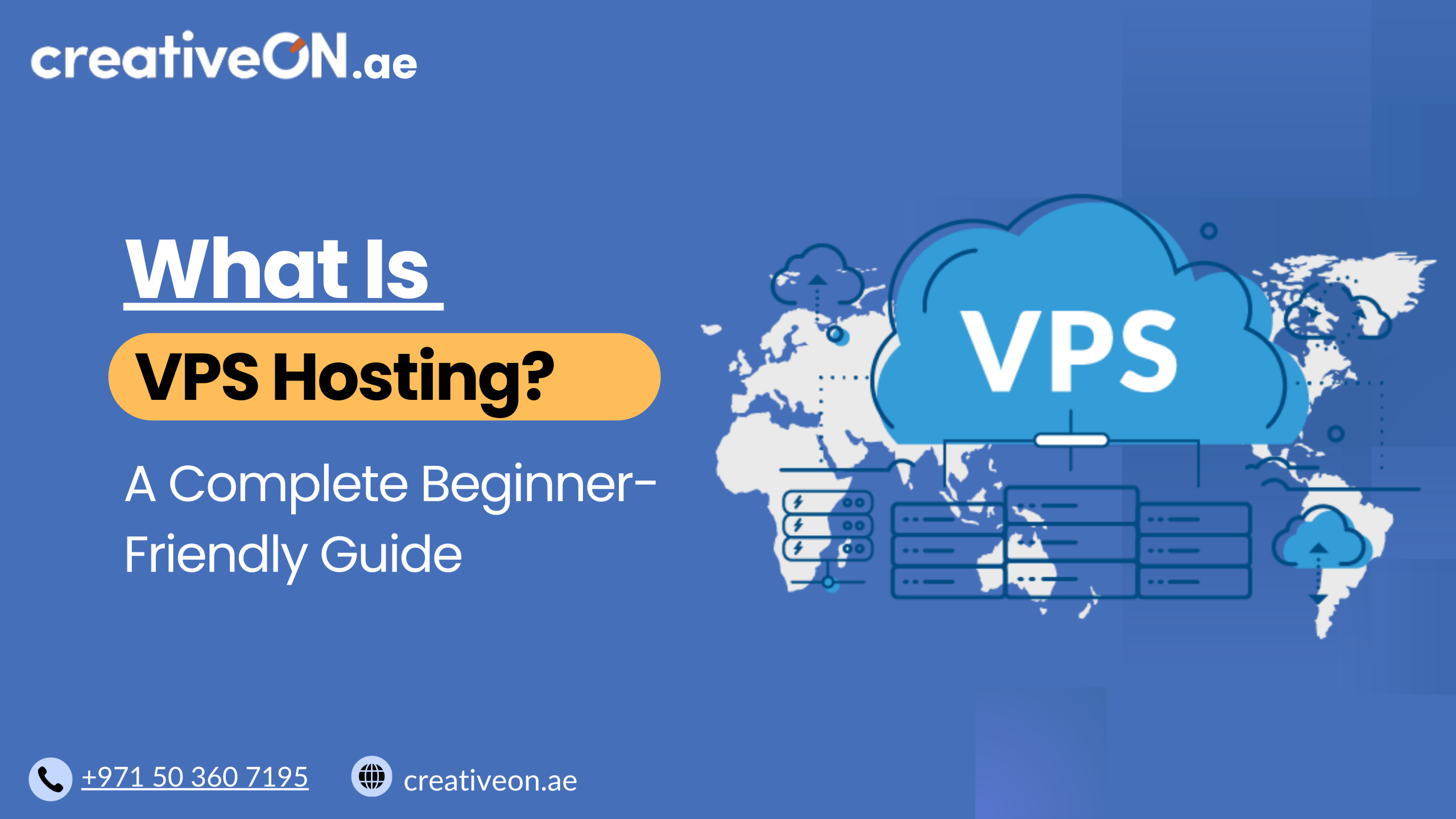
What Is VPS Hosting? A Complete Beginner-Friendly Guide
If you are planning to launch a business website, online store, blog, or web application, one of the most important decisions you will make is choosing the right web hosting solution. Your hosting directly affects your website’s speed, security, uptime, and overall user experience. Many beginners start with shared hosting because it is affordable and […]
If you are planning to launch a business website, online store, blog, or web application, one of the most important decisions you will make is choosing the right web hosting solution. Your hosting directly affects your website’s speed, security, uptime, and overall user experience.
Many beginners start with shared hosting because it is affordable and simple. But as websites grow, they often face problems like slow loading times, limited resources, downtime during traffic spikes, and reduced performance. That’s where VPS hosting becomes an important upgrade.
VPS hosting is one of the most popular hosting solutions for growing businesses because it offers better performance, more flexibility, and improved security without the high cost of a dedicated server. Whether you are a startup looking for reliable web hosting in UAE, an eCommerce business in Dubai, or a company expanding online globally, understanding VPS hosting can help you make smarter long-term decisions.
In this beginner-friendly guide, we’ll explain everything you need to know about VPS hosting in simple language — including how it works, its advantages, types, use cases, comparisons, and how to choose the right VPS hosting plan for your business.

What Is VPS Hosting?
VPS stands for Virtual Private Server.
VPS Hosting is a type of web hosting service where one powerful physical server is divided into multiple independent virtual servers using virtualization technology.
Each virtual server works almost like a separate dedicated server with its own:
- CPU resources
- RAM
- Storage
- Operating system
- Server environment
- Security settings
Although multiple users share the same physical hardware, each VPS operates independently from the others.
A Simple Real-Life Analogy
Imagine a large apartment building.
- The building itself = physical server
- Each apartment = VPS
- Residents = hosting users
Every apartment has:
- Private space
- Dedicated utilities
- Separate locks
- Independent control
Even though the building is shared, each resident has their own isolated environment.
That is exactly how VPS hosting works.
This is one reason many growing businesses move from shared hosting to VPS hosting as their traffic and website demands increase.
How Does VPS Hosting Work?
To understand VPS hosting properly, it helps to understand the technology behind it.
Step 1: A Physical Server Is Installed
A hosting provider sets up a powerful enterprise-grade server inside a secure data center.
These servers usually include:
- High-performance CPUs
- Large memory capacity
- Enterprise SSD or NVMe storage
- High-speed internet connectivity
- Redundant power systems
Step 2: Virtualization Technology Splits the Server
A software layer called a hypervisor divides the physical server into multiple virtual environments.
Each VPS gets:
- Dedicated resources
- Its own operating system
- Isolated software environment
- Independent access
The hypervisor ensures one VPS cannot directly interfere with another.
Popular virtualization technologies include:
- KVM
- VMware
- Hyper-V
- OpenVZ
You do not need to fully understand these technologies as a beginner, but knowing they exist helps explain why VPS hosting is more stable than shared hosting.
Step 3: Users Receive Administrative Access
Most VPS plans provide root or administrator-level access.
This allows users to:
- Install applications
- Configure server settings
- Manage hosting environments
- Create custom software setups
- Host multiple websites
This level of flexibility is a major advantage over shared hosting.
Step 4: Websites Operate Independently
Because resources are allocated separately, websites hosted on VPS environments generally perform more consistently.
If another user on the physical server experiences:
- traffic spikes
- malware attacks
- resource abuse
your VPS remains largely protected.
This isolation is one of the biggest reasons VPS hosting is considered a more secure and reliable solution.

VPS Hosting vs Shared Hosting
Many beginners ask:
“Why should I upgrade from shared hosting to VPS hosting?”
The answer depends on your website’s traffic, performance needs, and growth plans.
Here’s a simple comparison.
Feature | Shared Hosting | VPS Hosting |
Cost | Lower | Moderate |
Performance | Shared resources | Dedicated virtual resources |
Speed | Moderate | Faster |
Security | Basic | Better isolation |
Customization | Limited | High |
Scalability | Limited | Flexible |
Root Access | No | Yes |
Best For | Small websites | Growing businesses |
When Shared Hosting Is Enough
Shared hosting works well for:
- personal blogs
- small informational websites
- beginner websites
- low-traffic projects
When VPS Hosting Becomes Necessary
VPS hosting is usually better when:
- traffic increases
- website speed matters
- online transactions grow
- multiple websites are hosted
- security becomes important
- business applications are used
Many businesses searching for professional web hosting services UAE eventually upgrade to VPS hosting for these reasons.

VPS Hosting vs Cloud Hosting
People often confuse VPS hosting with cloud hosting.
While they are related, they are not exactly the same.
Feature | VPS Hosting | Cloud Hosting |
Infrastructure | Single physical server | Multiple connected servers |
Scalability | Moderate | Very high |
Reliability | High | Extremely high |
Resource Allocation | Fixed virtual resources | Dynamic resources |
Cost | Predictable | Usage-based in some cases |
VPS Hosting
Best for:
- stable business websites
- predictable traffic
- controlled environments
Cloud Hosting
Best for:
- rapidly scaling applications
- fluctuating traffic
- enterprise cloud infrastructure
Many modern providers now combine VPS and cloud technologies into scalable hosting environments.
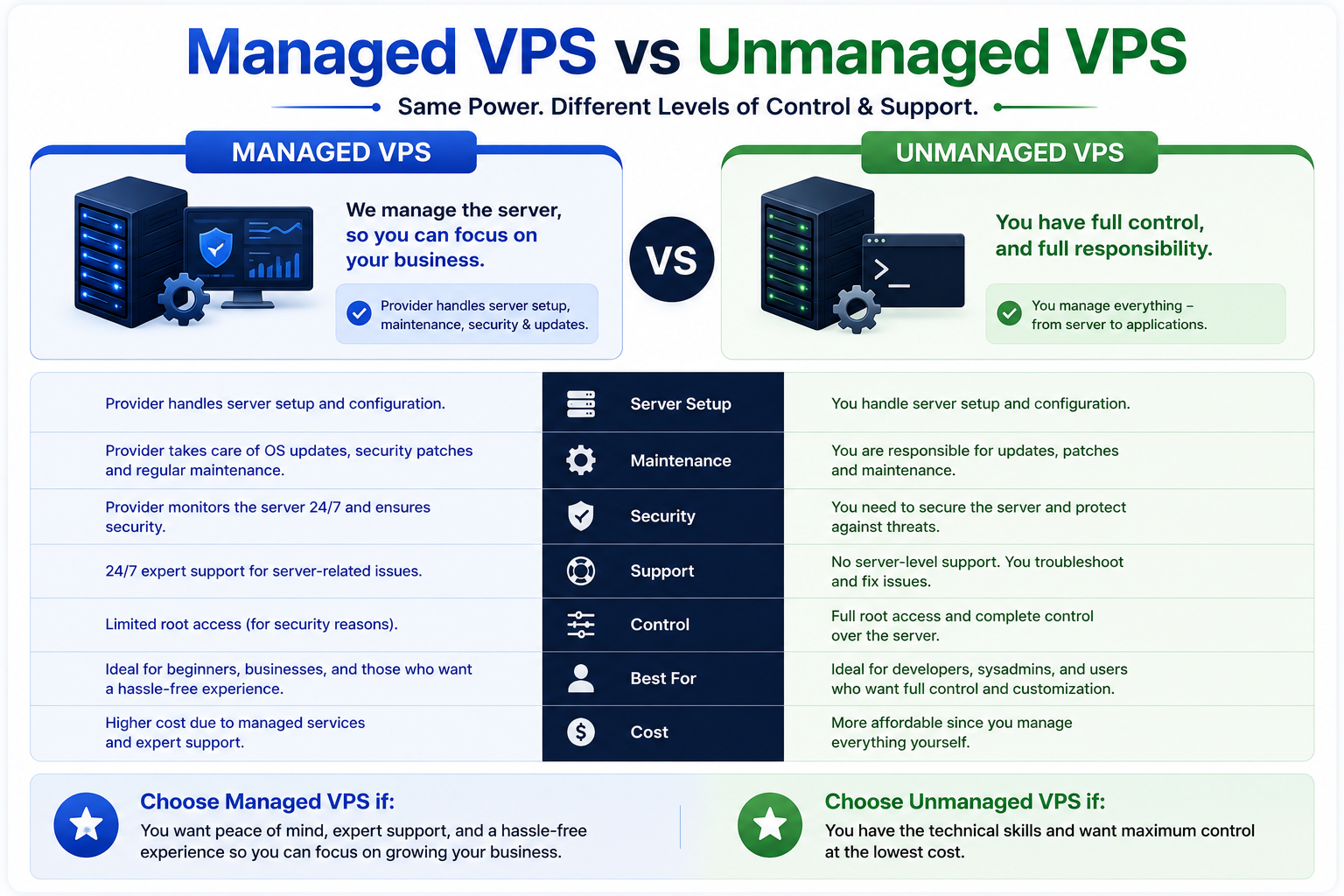
Managed vs Unmanaged VPS Hosting
This is one of the most important decisions beginners must make.
Managed VPS Hosting
With managed VPS hosting, the hosting provider handles:
- server maintenance
- software updates
- security patches
- monitoring
- technical support
- backups
Best For:
- beginners
- business owners
- non-technical users
Managed VPS hosting is highly recommended for businesses that want reliability without handling server administration themselves.
Unmanaged VPS Hosting
With unmanaged VPS hosting, you manage everything yourself.
This includes:
- server setup
- security configuration
- updates
- troubleshooting
Best For:
- developers
- system administrators
- advanced users
Unmanaged VPS offers more control but requires technical expertise.
Types of VPS Hosting
Not all VPS hosting solutions are identical.
Here are the main types.
Linux VPS Hosting
Linux VPS hosting is the most common option.
Advantages:
- cost-effective
- stable
- secure
- highly customizable
Popular Linux distributions include:
- Ubuntu
- CentOS
- Debian
- AlmaLinux
Linux VPS hosting is widely used for:
- WordPress hosting
- web applications
- business websites
Windows VPS Hosting
Windows VPS hosting uses Microsoft Windows Server environments.
Best for:
- ASP.NET applications
- Windows-based software
- Microsoft infrastructure
Windows VPS plans are usually more expensive due to licensing costs.
Fully Managed VPS
The provider handles most technical tasks.
Ideal for businesses wanting simplicity and support.
Semi-Managed VPS
The provider handles basic infrastructure while users manage applications and configurations.
Benefits of VPS Hosting
VPS hosting has become popular because it offers an excellent balance between affordability and performance.
Better Website Speed
Dedicated resources improve loading performance.
This helps:
- user experience
- SEO rankings
- customer satisfaction
Google considers page speed an important ranking factor.
A faster website can reduce bounce rates and improve conversions.
Improved Security
VPS hosting provides stronger isolation than shared hosting.
This reduces the risk of:
- malware spread
- neighboring account abuse
- server-wide vulnerabilities
Businesses handling customer data often prefer secure VPS environments.
Scalability
As your business grows, VPS resources can usually be upgraded easily.
You can increase:
- RAM
- storage
- CPU power
- bandwidth
This flexibility makes VPS hosting ideal for growing businesses.
Greater Customization
Users can:
- install custom applications
- configure firewalls
- optimize server settings
- host development environments
This flexibility is extremely valuable for agencies and developers.
Better Reliability
VPS hosting environments are more stable than shared hosting.
This results in:
- improved uptime
- fewer performance fluctuations
- better customer experience
Disadvantages of VPS Hosting
No hosting solution is perfect.
It’s important to understand the limitations too.
Higher Cost Than Shared Hosting
VPS hosting costs more than shared hosting because resources are dedicated.
However, it is still much more affordable than dedicated servers.
Some Technical Knowledge May Be Needed
Unmanaged VPS hosting requires technical skills.
Beginners usually prefer managed VPS solutions.
Resource Limits Still Exist
Although VPS hosting is powerful, it still shares physical hardware.
Extremely large websites may eventually require dedicated servers or cloud clusters.
Why VPS Hosting Matters for Businesses
Modern businesses rely heavily on their websites.
Slow or unstable hosting can negatively affect:
- SEO rankings
- customer trust
- online sales
- lead generation
For businesses looking for dependable web hosting Dubai or web hosting Abu Dhabi solutions, VPS hosting offers a strong balance between affordability and enterprise-level performance.
Better SEO Performance
Website speed affects:
- Core Web Vitals
- bounce rates
- mobile experience
- search rankings
A fast VPS environment can help improve overall website performance.
Better User Experience
Visitors expect websites to load quickly.
Slow websites often lose:
- customers
- inquiries
- sales opportunities
Stability During Traffic Spikes
Businesses running:
- digital ads
- promotions
- seasonal sales
often experience sudden traffic increases.
VPS hosting handles these spikes much better than shared hosting.

Who Should Use VPS Hosting?
VPS hosting is ideal for:
Growing Businesses
Businesses experiencing increasing traffic or operational growth.
eCommerce Stores
Online stores need:
- stability
- security
- fast checkout performance
Agencies
Marketing and web agencies often host multiple client websites on VPS environments.
Developers
Developers use VPS hosting for:
- testing environments
- application hosting
- software deployment
High-Traffic WordPress Websites
Businesses using web hosting WordPress solutions often upgrade to VPS for better speed and performance.
Signs You Need to Upgrade to VPS Hosting
Here are common warning signs.
Your Website Loads Slowly
Performance issues usually indicate resource limitations.
Traffic Is Increasing
More visitors require more resources.
You Need Better Security
Businesses handling customer data often outgrow shared hosting security limitations.
You Want More Server Control
Custom applications often require VPS-level flexibility.
Your Hosting Provider Restricts Resources
Many shared hosting plans limit:
- CPU usage
- memory
- processes
- traffic handling
How to Choose the Right VPS Hosting
Choosing the right VPS hosting plan requires careful evaluation.
Understand Your Needs
Consider:
- traffic levels
- website type
- application requirements
- future growth
Check Server Storage
Modern VPS hosting should ideally use:
- SSD storage
or - NVMe storage
NVMe storage is faster and improves performance significantly.
Review Uptime Guarantees
Reliable providers usually offer:
- 99.9% uptime
- infrastructure redundancy
- monitoring systems
Consider Server Location
A UAE-based audience benefits from nearby server locations for lower latency.
This is important for businesses targeting:
- Dubai
- Abu Dhabi
- Middle East customers
Evaluate Technical Support
Reliable support matters greatly.
Especially for beginners.
Avoid Choosing Only by Price
Many users search for:
- cheapest web hosting
- lifetime web hosting
But extremely cheap hosting may compromise:
- security
- uptime
- performance
- support quality
Focus on value instead of price alone.
Real-Life Business Example
Imagine a growing fashion store in Dubai.
Initially, the company starts with shared hosting because traffic is low.
After successful marketing campaigns:
- website traffic increases
- product images grow
- checkout activity rises
- customer visits spike during promotions
The shared hosting environment becomes slow.
Customers begin abandoning carts because pages load slowly.
The business upgrades to VPS hosting.
Results improve significantly:
- faster website speed
- smoother checkout experience
- better SEO performance
- improved uptime
- stronger customer trust
This is a common growth journey for many businesses using web hosting company Dubai solutions.
Common Misconceptions About VPS Hosting
“VPS Hosting Is Only for Large Enterprises”
False.
Many startups and SMEs use VPS hosting.
“VPS Hosting Is Too Technical”
Managed VPS hosting makes server management beginner-friendly.
“Cloud Hosting Completely Replaced VPS”
Not true.
VPS hosting still remains highly popular for controlled, stable environments.
“Shared Hosting and VPS Hosting Are Similar”
They are fundamentally different in:
- performance
- isolation
- flexibility
- reliability
Related Concepts You Should Understand
Domain Names
A domain is your website address.
Examples:
- example.ae
- example.com
Businesses in UAE often prefer .ae domains for local trust.
DNS (Domain Name System)
DNS connects domain names to hosting servers.
It works like the internet’s directory system.
TLD and SLD
TLD (Top-Level Domain)
Examples:
- .com
- .ae
- .net
SLD (Second-Level Domain)
The main brand name before the extension.
Cloud Infrastructure
Modern hosting environments increasingly use cloud-based technologies for scalability and reliability.
Google Workspace Solutions
Businesses often combine hosting with:
- professional business email
- collaboration tools
- cloud productivity apps
CreativeON.com and CreativeON.ae provide both infrastructure and Google Workspace solutions for businesses in UAE and globally.