How to Add, Edit, and Remove Users in Google Workspace
Managing user accounts is one of the first responsibilities you’ll handle as a Google Workspace administrator. Whether you’re welcoming a new employee, updating an existing account, or removing access when someone leaves the company, keeping user accounts organized helps your business stay secure and productive. For organizations using Google Workspace in the UAE, user management […]
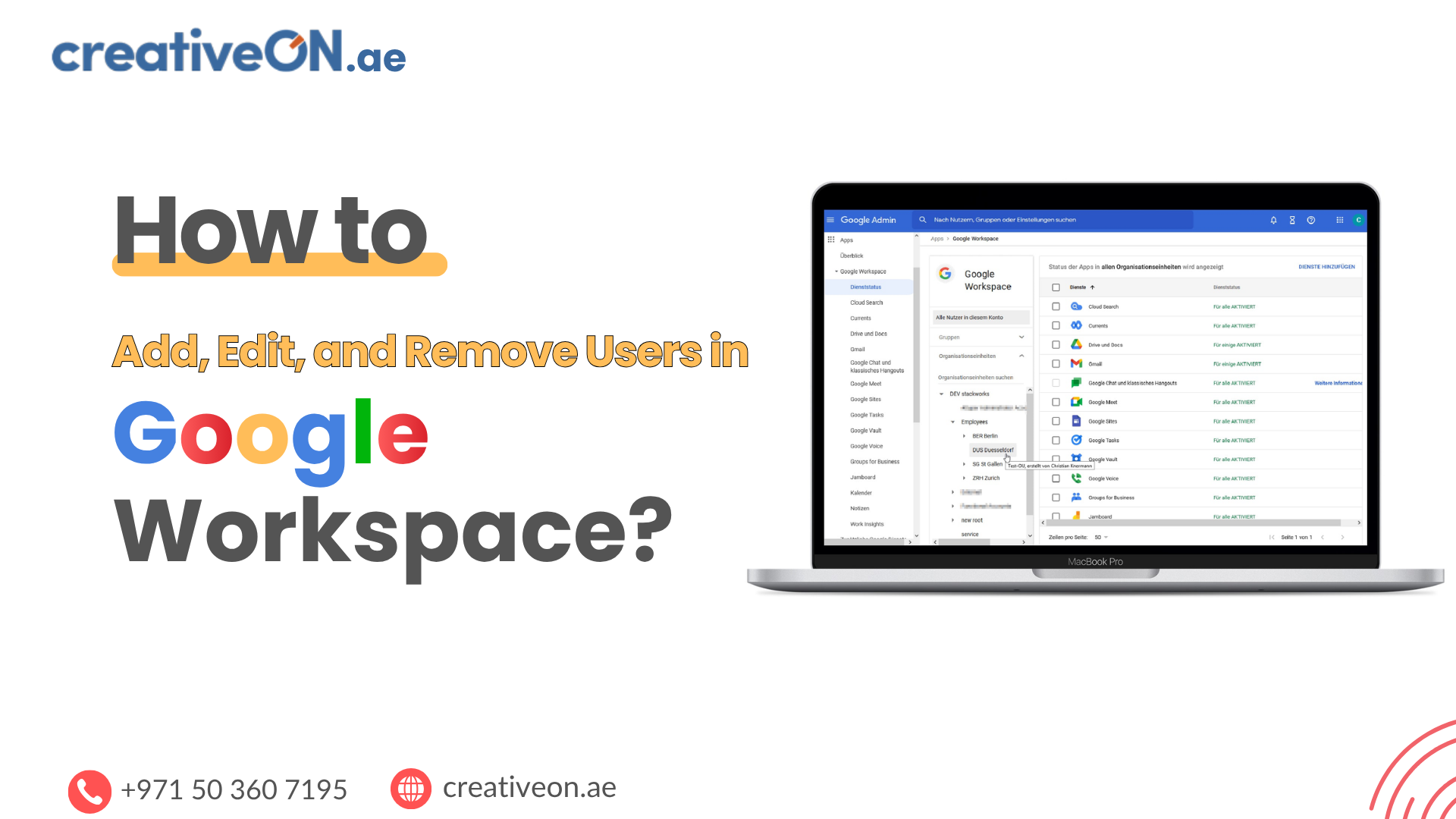
Managing user accounts is one of the first responsibilities you’ll handle as a Google Workspace administrator. Whether you’re welcoming a new employee, updating an existing account, or removing access when someone leaves the company, keeping user accounts organized helps your business stay secure and productive.
For organizations using Google Workspace in the UAE, user management is a routine task that supports smooth employee onboarding and offboarding while ensuring everyone has access to the tools they need. In this guide, you’ll learn how to add, edit, suspend, and remove users in Google Workspace, along with a few best practices that can save time and reduce administrative mistakes.
Before You Begin
Before managing users, make sure you have the necessary permissions. Only Super Admins or administrators with User Management privileges can create, edit, suspend, or delete user accounts.
You’ll also need an available Google Workspace license. Every active user account requires a license. If all your licenses are already in use, you’ll need to purchase additional licenses or free up an existing one before adding another user. Depending on your organization’s configuration, licenses may be assigned automatically or manually after the account is created.
It’s also important to understand the difference between a User and a Google Group. A user account belongs to an individual employee and includes a mailbox, login credentials, and access to Google Workspace services. A Google Group, on the other hand, provides a shared email address for multiple people without creating another user account.

How to Add a New User
Adding a new user gives an employee their own business email address and access to your organization’s Google Workspace services.
To create a new account:
- Sign in to the Google Workspace Admin Console.
- Go to Directory > Users.
- Click Add New User.
- Enter the employee’s:
- First name
- Last name
- Primary email address
- Organizational Unit (if applicable)
- Create a temporary password or allow Google to generate one.
- Save the new account.
If your organization doesn’t assign licenses automatically, remember to assign one after creating the user so they can start using Google Workspace services.
Practical Tip
Many businesses in Dubai and across the UAE create employee accounts one or two days before the employee’s first working day. This gives the IT team enough time to assign licenses, configure groups, verify access, and avoid delays during onboarding.

How to Edit an Existing User
Employee information changes over time. You may need to update a user’s details after a promotion, department transfer, or personal information change.
To edit a user:
- Open the Admin Console.
- Navigate to Directory > Users.
- Select the user you want to update.
- Edit the required information.
- Save your changes.
You can update information such as:
- Display name
- Recovery email address
- Recovery phone number
- Organizational Unit
- Contact details
- Employee information
Most changes take effect almost immediately.
If you need to change a user’s primary email address, Google Workspace provides a separate option to rename the account. This process differs slightly from editing profile information but allows the user to keep their existing mailbox, files, and account data.
How to Reset a User’s Password
Password resets are one of the most common administrative tasks.
If an employee forgets their password or you’re preparing an account for a new staff member, you can reset it from the user’s profile.
Simply:
- Open the user’s account.
- Select Reset Password.
- Enter a temporary password or generate one automatically.
- Require the user to change their password at the next sign-in.
For detailed password management instructions, you can link to your dedicated article about resetting Google Workspace user passwords.
How to Add an Email Alias
Sometimes an employee needs another email address without creating a second user account.
For example:
- sales@company.com
- support@company.com
- john.smith@company.com
- jsmith@company.com
Instead of purchasing another license, you can add an email alias to the existing user account.
Email aliases deliver messages to the same mailbox while helping businesses manage multiple public-facing email addresses more efficiently.
Suspend vs Delete a User
When an employee leaves or takes an extended break, administrators often wonder whether they should suspend or delete the account.
The right choice depends on the situation.
| Suspend a User | Delete a User |
| User cannot sign in | Account is removed |
| Emails and files remain | Data is eventually deleted if not transferred |
| Can be reactivated anytime | Can only be recovered for a limited period (approximately 20 days) |
| Ideal for temporary leave | Best for permanent departures |
If an employee may return, suspending the account is usually the safer option.
How to Suspend a User
Suspending a user immediately blocks access while preserving the user’s emails, Google Drive files, and other account data.
To suspend an account:
- Go to Directory > Users.
- Select the user.
- Click More.
- Choose Suspend User.
- Confirm the action.
The account remains inactive until an administrator restores it.
How to Restore a Suspended User
If an employee returns to work, restoring the account is quick.
Open the user’s profile and choose Reactivate User.
The employee can then sign in using the same account and continue working without losing their existing data.
How to Delete a User
Before deleting an account, make sure you’ve transferred any important business data to another employee.
Google Workspace includes a Transfer User Data tool that allows administrators to transfer supported data, including Google Drive file ownership and certain Calendar information, before removing an account.
Once the data has been transferred:
- Open Directory > Users.
- Select the user.
- Click Delete User.
- Confirm the deletion.
Deleted accounts can typically be recovered for approximately 20 days. After that recovery period, the account and its remaining data are permanently removed.
Deleting a user also frees up the assigned Google Workspace license, allowing you to assign it to another employee.
Managing Multiple Users
As organizations grow, managing users one by one becomes less efficient.
Google Workspace supports bulk user management using CSV files. Administrators can create multiple users, update user information, suspend accounts, or restore users in bulk, saving considerable time.
If your business is expanding across multiple offices in the UAE, using bulk management tools can simplify employee onboarding and help maintain consistency across your organization.
Best Practices for User Management
Following a few simple practices can make user management much easier over time.
- Use a consistent email naming format across your organization.
- Assign only the administrator roles employees actually need.
- Transfer important files before deleting any account.
- Review inactive accounts regularly and suspend or remove them when appropriate.
- Organize employees into Organizational Units to simplify policy management.
- Create a documented onboarding and offboarding process so every employee follows the same account lifecycle.
These small steps help reduce mistakes while improving both security and administrative efficiency.