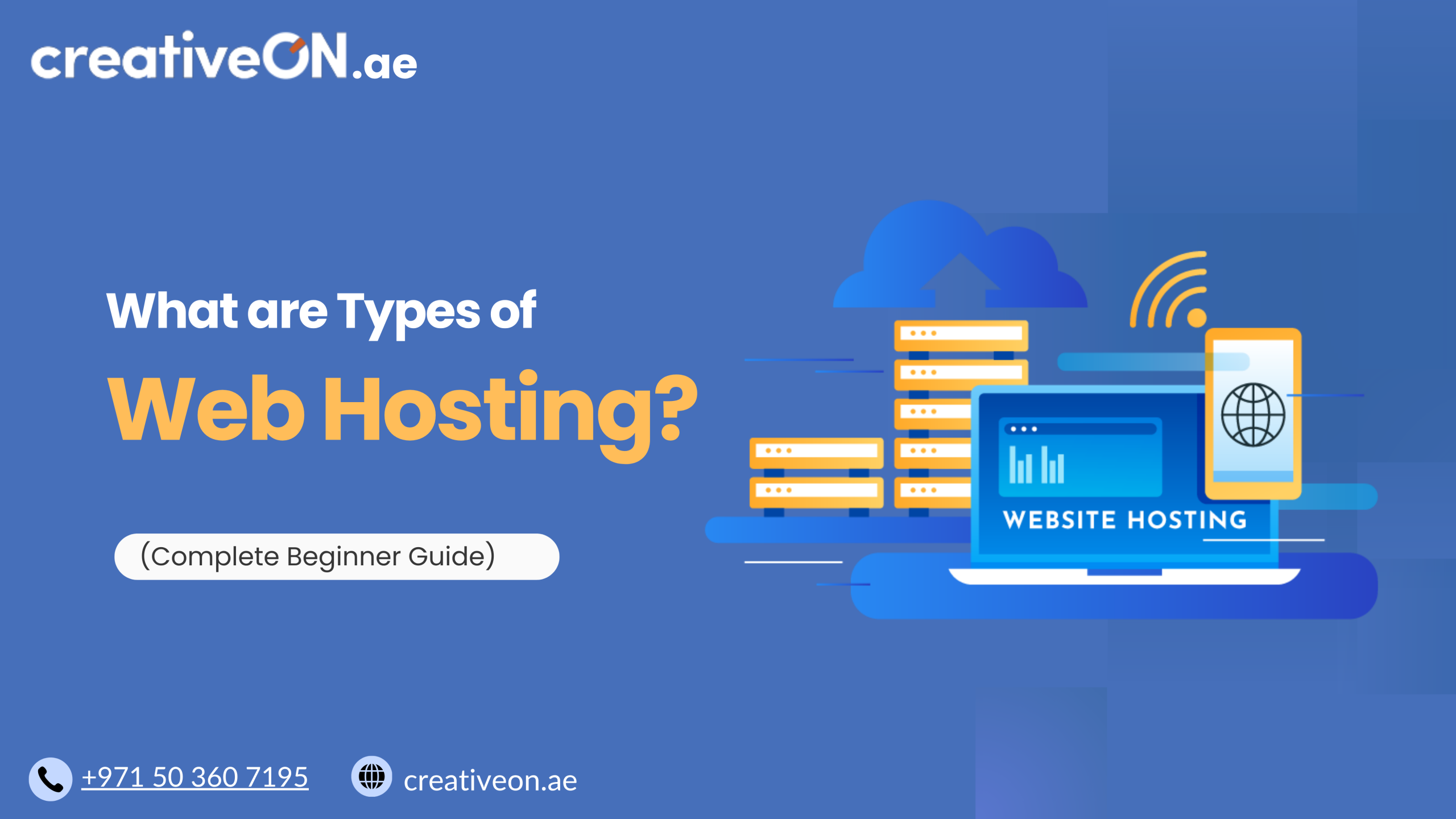
What are Types of Web Hosting? (Complete Beginner Guide)
If you are planning to build a website, one of the first decisions you will face is choosing the right web hosting. At first, it may sound technical, but the idea is actually very simple. Every website you see online needs a place to “live.” That place is called web hosting. It stores your website […]
If you are planning to build a website, one of the first decisions you will face is choosing the right web hosting. At first, it may sound technical, but the idea is actually very simple.
Every website you see online needs a place to “live.” That place is called web hosting. It stores your website files and makes them available to visitors 24/7.
For businesses in the UAE and around the world, hosting is not just a technical choice—it directly affects website speed, security, and customer trust. A slow or unstable website can lose visitors, while a well-hosted website can grow a business faster.
In this guide, we will break down the types of web hosting in the simplest way so you can confidently choose the right one for your needs.
What is Web Hosting?
Web hosting is a service that allows your website to be accessible on the internet.
When you create a website, it contains files like images, text, videos, and code. These files must be stored on a powerful computer called a server.
A hosting company provides space on these servers so your website stays online all the time.
Without hosting, your website cannot be viewed by anyone on the internet.
Types of Web Hosting
There are several types of web hosting, and each one is designed for different website sizes, budgets, and performance needs.
Let’s understand them step by step.
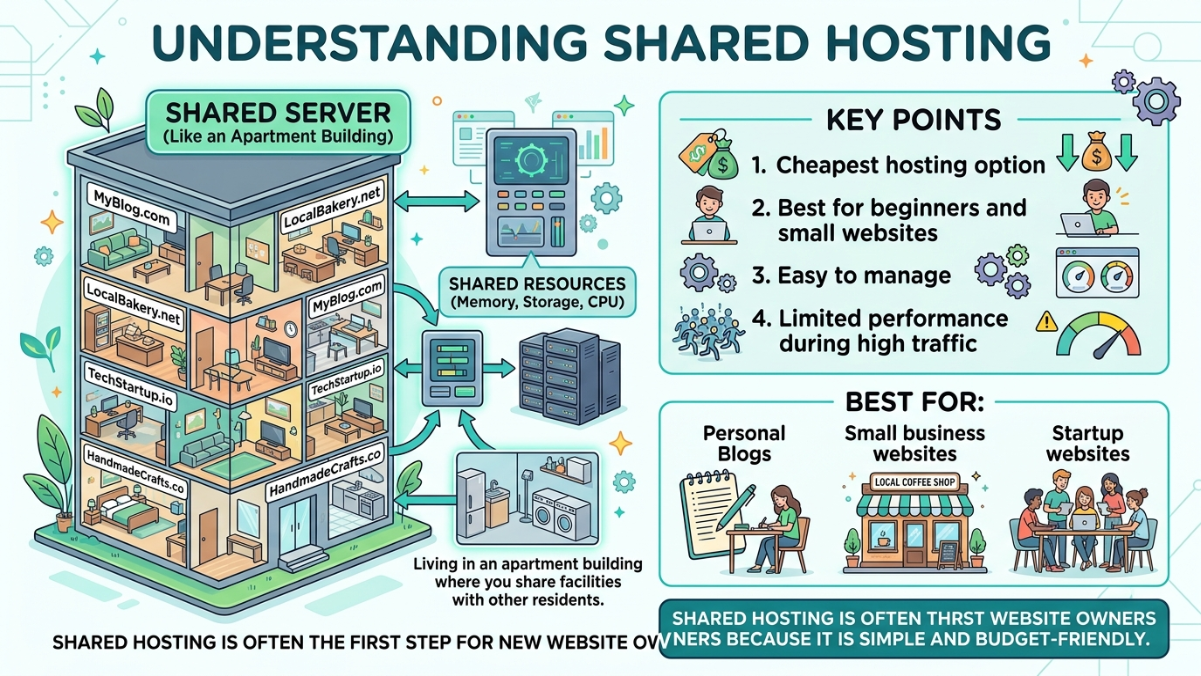
1. Shared Hosting
Shared hosting is the most basic and affordable type of hosting.
In this setup, multiple websites share the same server and its resources like RAM, CPU, and storage.
Think of it like living in an apartment building where everyone shares the same infrastructure.
Key Features:
- Low cost and beginner-friendly
- Easy setup with minimal technical skills
- Shared performance with other websites
- Limited scalability for high traffic
Best For:
- Personal websites
- Blogs
- Small business websites
- Startup landing pages
Shared hosting is often the first step for beginners starting their online journey.
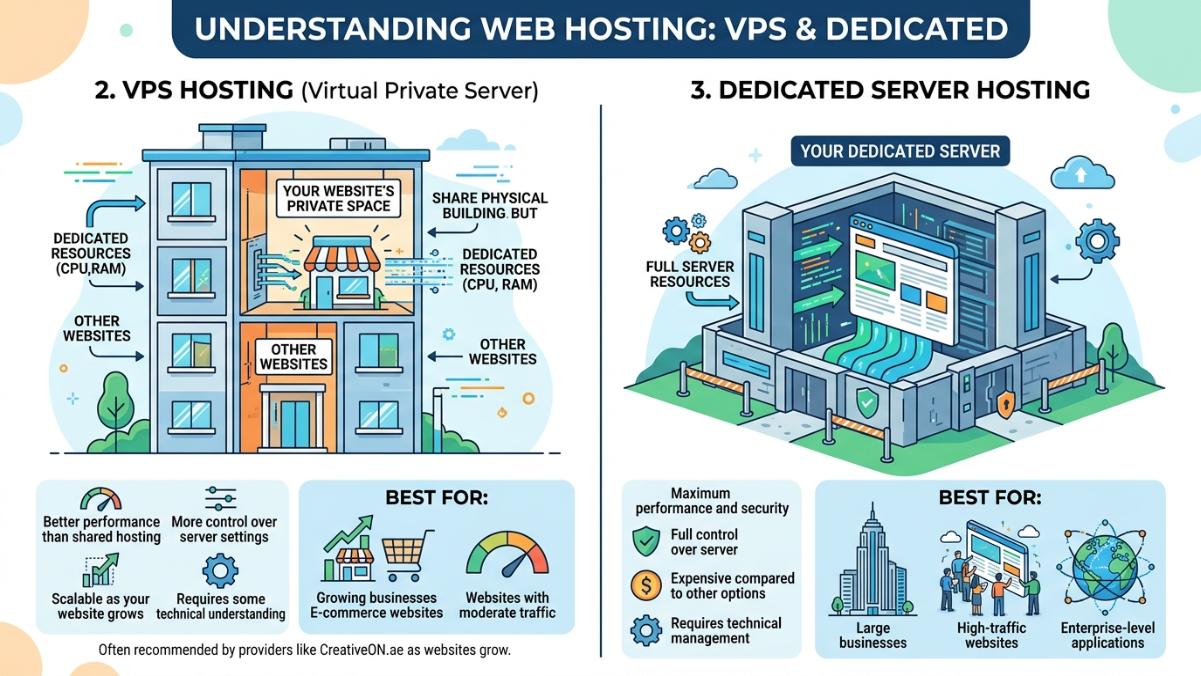
2. VPS Hosting (Virtual Private Server)
VPS hosting is a more powerful and flexible version of shared hosting.
Although multiple websites still share the same physical server, each user gets a dedicated portion of resources.
Think of it like having your own private apartment inside a large building.
Key Features:
- Better speed and performance than shared hosting
- Dedicated allocated resources
- More control over server settings
- Scalable for growing websites
Best For:
- Growing businesses
- E-commerce stores
- Websites with moderate traffic
For expanding businesses in UAE, VPS hosting is often the natural upgrade after shared hosting.
3. Dedicated Server Hosting
Dedicated hosting gives you an entire physical server for your website only.
No sharing. No limitations from other users. Full control over everything.
Think of it as owning a complete building instead of sharing space.
Key Features:
- Maximum performance and security
- Full server control and customization
- High cost compared to other hosting types
- Requires technical management
Best For:
- Large enterprises
- High-traffic websites
- Banking or enterprise-level systems
This is a powerful solution for websites that cannot afford downtime or performance issues.
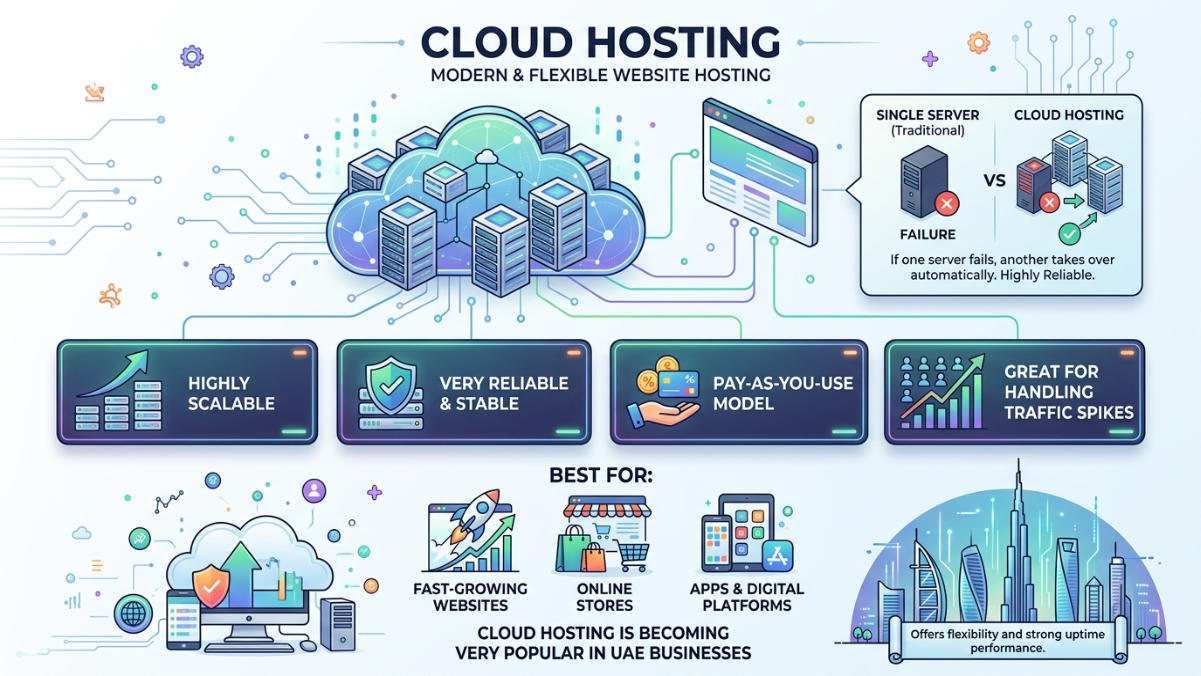
4. Cloud Hosting
Cloud hosting is a modern and highly scalable hosting solution.
Instead of relying on a single server, your website runs on a network of connected servers. If one server fails, another takes over instantly.
Key Features:
- High uptime and reliability
- Easy scaling during traffic spikes
- Pay-as-you-use flexibility in many cases
- Strong performance and stability
Best For:
- Fast-growing businesses
- Online stores
- SaaS platforms and apps
Cloud hosting is becoming very popular in the UAE due to its flexibility and reliability for modern businesses.
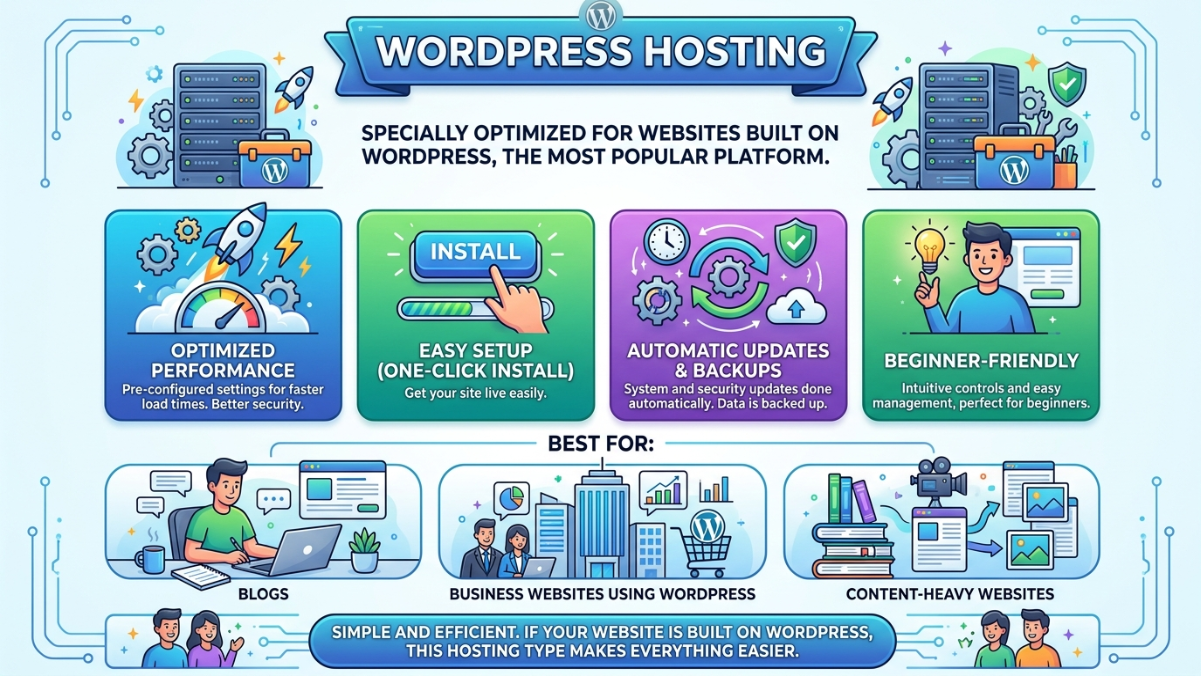
5. WordPress Hosting
WordPress hosting is specially optimized for websites built on WordPress.
It comes with pre-configured settings, so your website runs faster and more securely without technical setup.
Key Features:
- Optimized for WordPress performance
- One-click installation
- Automatic updates and backups
- Beginner-friendly management
Best For:
- Bloggers
- Small to medium business websites
- Content-driven websites
If your website runs on WordPress, this hosting type makes management much easier.
6. Reseller Hosting
Reseller hosting allows you to buy hosting resources and resell them to your own clients.
It is commonly used by web agencies and freelancers who manage multiple customer websites.
Key Features:
- Ability to start your own hosting business
- Manage multiple client accounts
- Custom branding options in some plans
- Requires basic technical knowledge
Best For:
- Web developers
- Digital agencies
- Freelancers offering hosting services
Which Type of Web Hosting Should You Choose?
Choosing the right hosting depends on your website size, budget, and future goals.
Here is a simple guide:
- 🟢 Just starting out: Shared Hosting
- 🟡 Growing business: VPS Hosting
- 🔵 Large enterprise: Dedicated Server
- 🟣 Fast scaling or modern apps: Cloud Hosting
- 🟠 WordPress website: WordPress Hosting
If you are unsure, many businesses start small and upgrade as they grow.
Why Web Hosting Matters for Your Website
Your hosting directly impacts how your website performs online.
Good hosting helps you:
- Improve website speed
- Increase Google rankings
- Build customer trust
- Handle more visitors easily
- Reduce downtime risks
In competitive markets like the UAE, even a few seconds of delay can affect user experience and conversions.
Real-Life Example (Easy Understanding)
Let’s make it simple:
- Shared Hosting → Renting a desk in a shared office
- VPS Hosting → Having your own private office in a building
- Dedicated Server → Owning the entire building
- Cloud Hosting → Multiple offices connected across cities
- WordPress Hosting → A ready-made office designed for your business type
This helps you clearly understand the difference without technical confusion.
Common Misconceptions About Web Hosting
Many beginners misunderstand hosting. Let’s clear it up:
- Hosting is NOT the same as a domain name
- Expensive hosting is not always necessary
- You can upgrade hosting anytime as your website grows
- Not all hosting types require technical skills
Understanding these basics helps you avoid costly mistakes.
Related Concepts You Should Know
Web hosting is part of a bigger system that powers your website.
You should also understand:
- Domain Name – Your website address (like example.com or .ae)
- DNS (Domain Name System) – Connects domain to hosting
- TLD (Top-Level Domain) – Extensions like .com, .ae, .net
- SSL Certificate – Secures your website with HTTPS
- Cloud Infrastructure – Modern scalable hosting technology
These components all work together to keep your website running smoothly.
At CreativeON.ae (a UAE-focused extension of CreativeON.com), these services are designed to work as a complete digital infrastructure system for businesses.