What Is a Virtual Private Server (VPS)?
A Virtual Private Server (VPS) is a virtual machine that runs on a physical server and provides an independent operating system environment with configured computing resources. It allows users to run websites, applications, and other services with greater control than conventional shared hosting, while sharing the underlying physical hardware with other virtual servers. VPS hosting […]
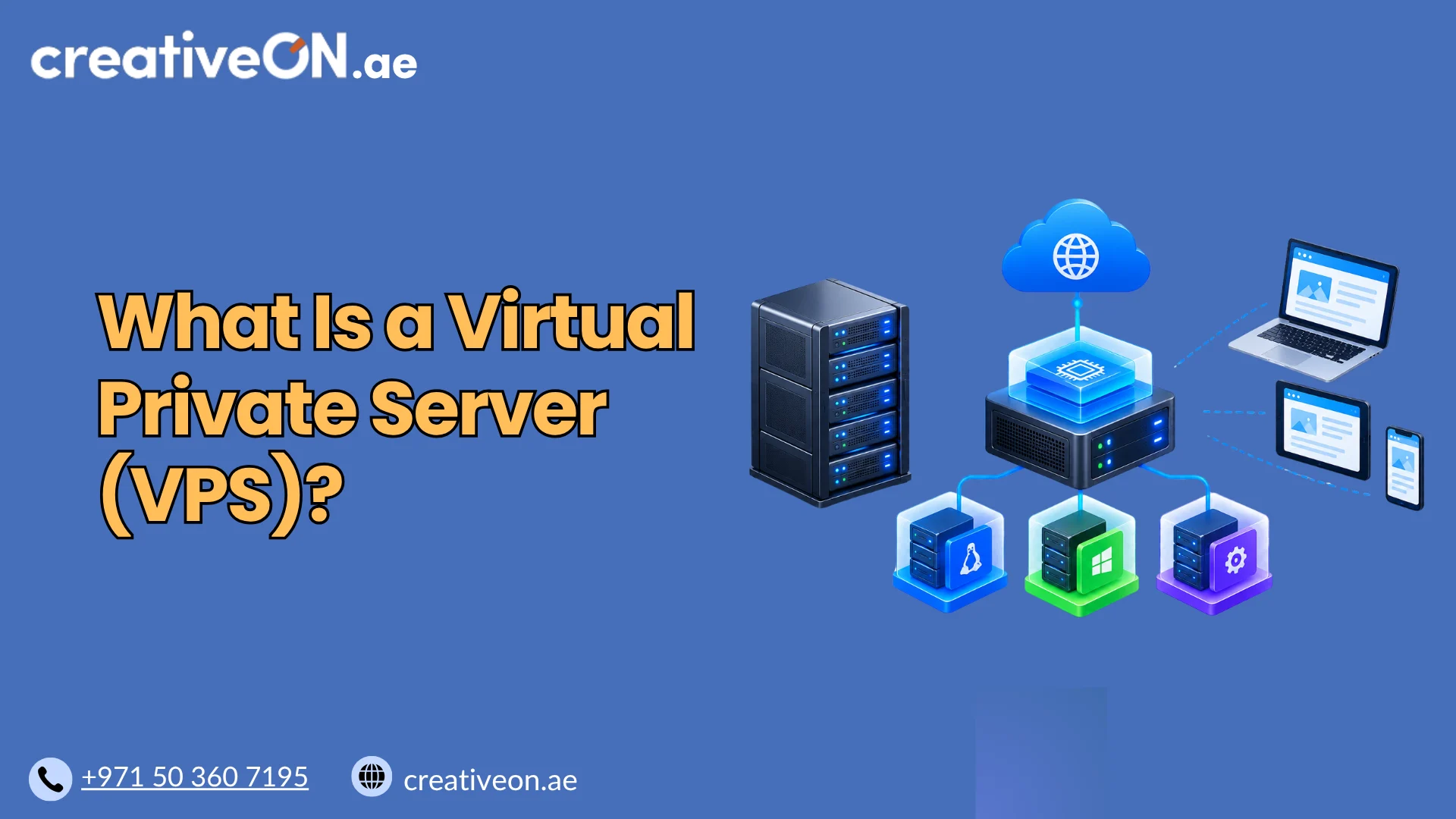
A Virtual Private Server (VPS) is a virtual machine that runs on a physical server and provides an independent operating system environment with configured computing resources. It allows users to run websites, applications, and other services with greater control than conventional shared hosting, while sharing the underlying physical hardware with other virtual servers.
VPS hosting is commonly used by businesses, developers, and website owners who need a configurable server environment without renting an entire physical server.
For businesses in the UAE, understanding what a VPS is and how it works can help determine whether virtual server technology suits their website, application, or business infrastructure.
How Does a Virtual Private Server Work?
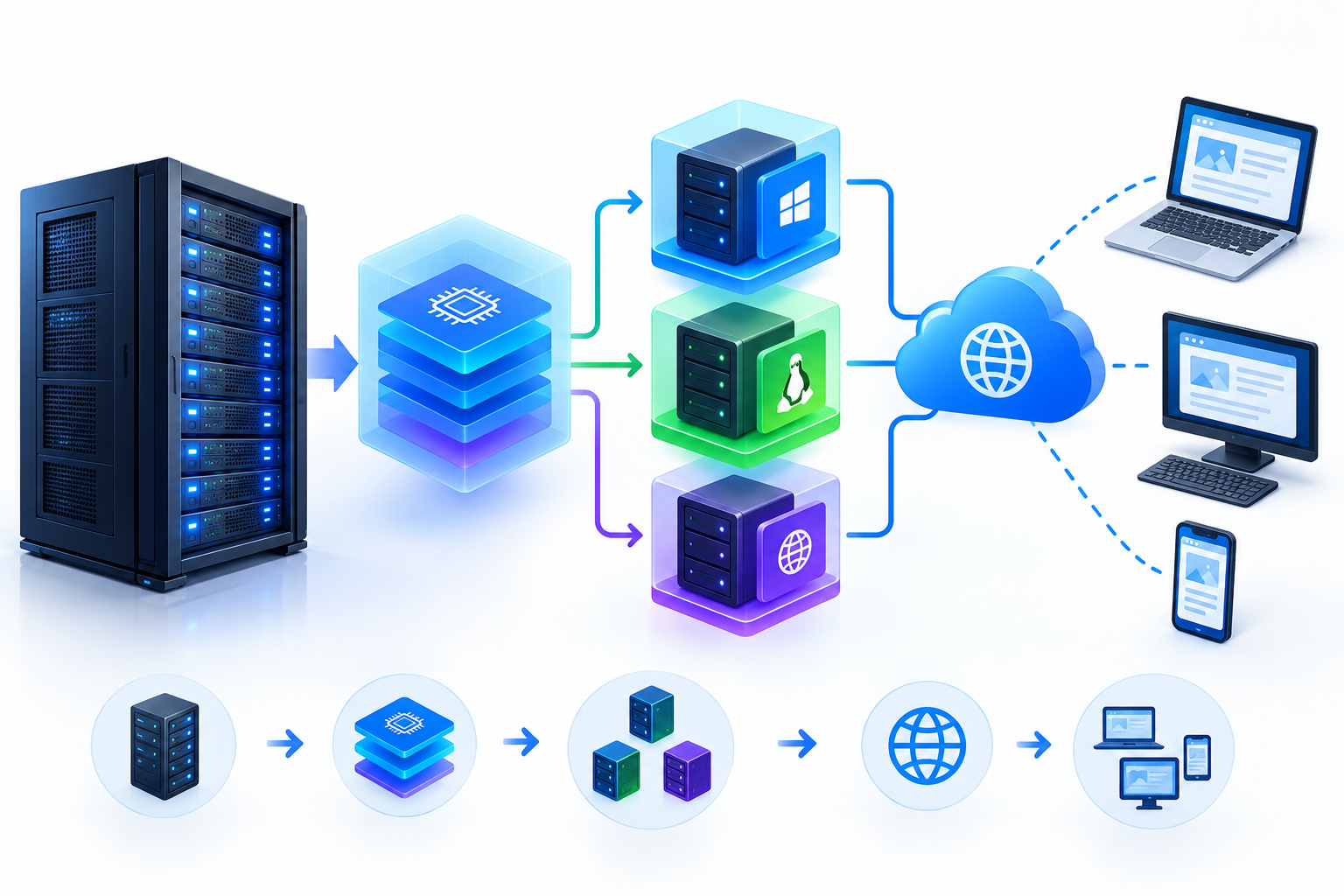
A virtual private server works through virtualization technology, which allows one physical server to run multiple independent virtual machines.
A software layer called a hypervisor manages these virtual machines and enables them to use the physical server’s computing resources.
The process works as follows:
- Physical server: A physical machine provides CPU, memory, storage, and network connectivity.
- Virtualization: The hypervisor creates and manages separate virtual machine environments on that hardware.
- Resource allocation: Each VPS receives configured computing resources according to its plan and configuration.
- Operating system: Each virtual machine runs a supported operating system, such as Linux or Windows Server.
- Application deployment: Users can install compatible software, host websites, run applications, and configure server settings according to their permissions.
Although several virtual servers may share the same physical machine, each operates within its own virtual environment. Actual performance depends on the allocated resources, underlying hardware, storage and network configuration, and the provider’s infrastructure.
Imagine a physical server as a building containing separate apartments. Each apartment has its own allocated space, but the building itself is shared. Similarly, a VPS operates in a separate virtual environment while using resources from the same physical server.
What Resources Does a VPS Provide?
A VPS provides configured computing resources that determine which applications it can run and how effectively it can handle its workload.
The main resources include:
- CPU: Processes application requests, calculations, and other computing tasks.
- RAM: Holds data and processes required by running applications.
- Storage: Stores the operating system, website files, databases, and application data.
- Network connectivity: Enables communication between the VPS, website visitors, and external services.
- Bandwidth allocation: Determines how much data can be transferred under the hosting plan’s limits and policies.
- Operating system: Provides the software environment for running applications and managing the server.
The resources available depend on the selected VPS plan. A small website may need relatively modest resources, while a business application or database may require more processing capacity, memory, and storage.
Allocated resources do not guarantee identical performance across all providers. Hardware quality, resource contention, virtualization technology, and network conditions can also affect server performance.
What Is a Virtual Private Server Used For?
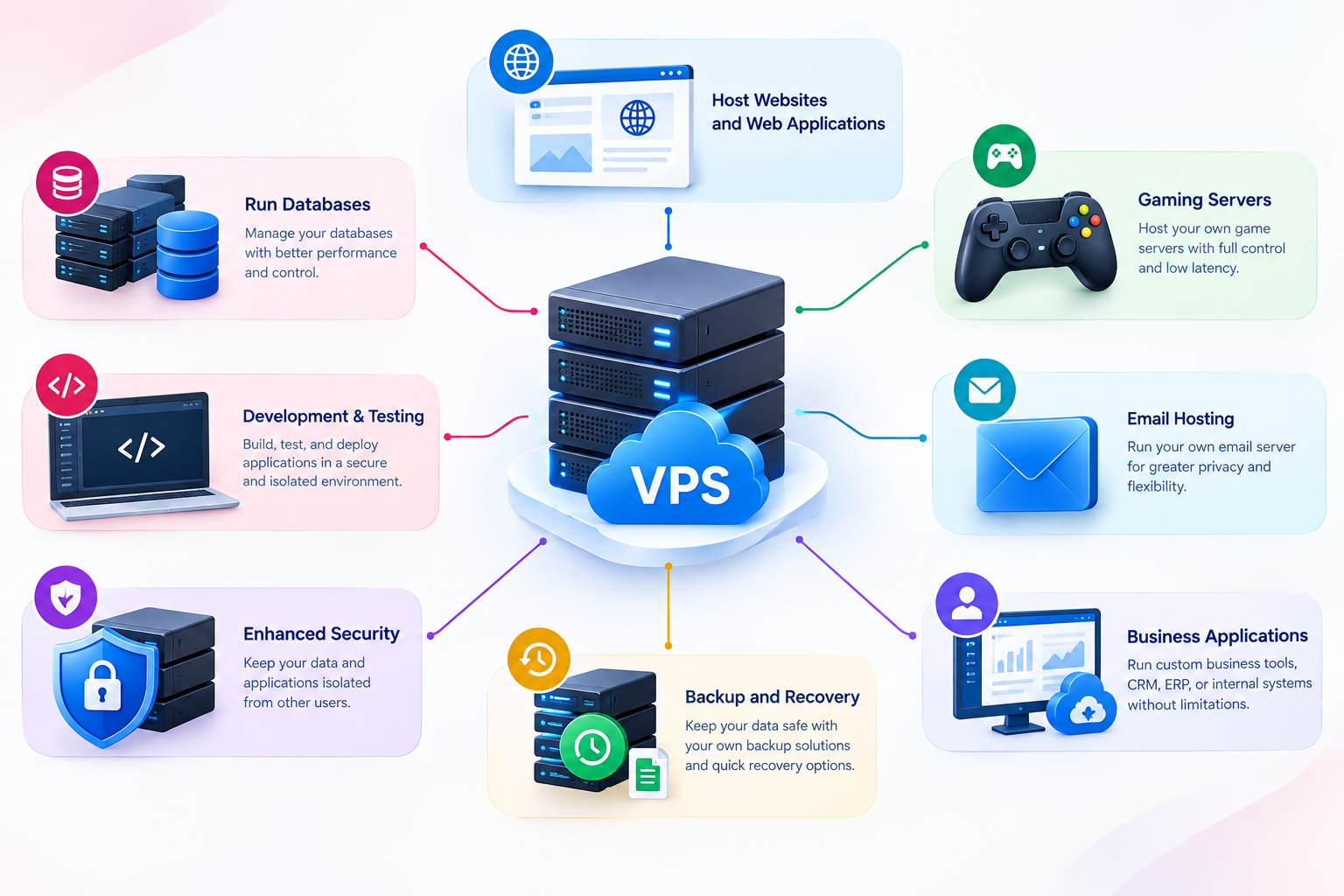
A VPS can support a range of workloads because it provides a configurable environment for running server software and applications.
Common uses include:
- Website hosting: Running business websites, content management systems, and online stores.
- Business applications: Hosting compatible APIs, internal tools, and other applications.
- Database hosting: Running databases when the workload and security requirements suit a VPS environment.
- Development and testing: Creating separate environments for testing software, dependencies, and server configurations.
- Remote server administration: Managing a server remotely using tools such as SSH for Linux or Remote Desktop Protocol (RDP) for supported Windows Server configurations.
The appropriate VPS configuration depends on the application’s resource requirements, operating system, security needs, and administration workload.
Is a Virtual Private Server Private and Secure?
A virtual private server provides an environment that is logically separated from other virtual machines on the same physical hardware. However, the term private does not mean that the customer owns the physical server or that security is automatically guaranteed.
VPS security depends on the virtualization platform, hosting provider, operating system, applications, and server configuration.
Important security practices include:
- Keeping the operating system and installed software updated.
- Using strong authentication and restricting administrative access.
- Configuring firewalls and allowing only necessary network services.
- Monitoring server activity and investigating unusual behavior.
- Maintaining backups and testing recovery procedures.
Depending on the hosting arrangement, customers may be responsible for some or all of these tasks. Managed VPS services may include certain administration and security tasks, so review the provider’s service scope before selecting a plan.
Businesses handling sensitive information should also verify their security, data-location, and regulatory requirements. Choosing a UAE-focused hosting provider does not, by itself, establish that a server is physically located in the UAE or that every applicable compliance obligation is satisfied.
How Is a VPS Different From Shared Hosting?
The main difference is the server environment and level of control.
With traditional shared hosting, multiple customers host websites within a shared hosting environment managed by the provider. With VPS hosting, each customer receives a separate virtual server environment with its own configured resources and operating system.
A VPS typically provides more flexibility for installing software and adjusting server settings, but it can require more technical administration.
Shared hosting may be sufficient for a small website with straightforward requirements. A VPS may be more appropriate when an application needs greater control over its environment or has outgrown the capabilities of its current hosting arrangement.
For a detailed comparison, read our suggested guide to VPS vs. Shared Hosting.